In brief
The dispute over Kashmir has been reignited by Trump's statement offering to mediate, which complicates India's diplomatic stance as it maintains a firm rejection of foreign involvement.
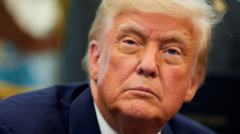
India is facing a diplomatic conundrum following U.S. President Donald Trump's recent offer to mediate in the enduring Kashmir conflict between India and Pakistan. Announcing a ceasefire over the weekend after intense military clashes, Trump expressed hope for a resolution after "a thousand years" of dispute. This unexpected approach is particularly sensitive for India, which has historically opposed any third-party involvement in its territorial matters, particularly regarding Kashmir. The dialogue over Kashmir traces back to 1947, when India gained independence and was partitioned, resulting in both countries claiming the region. Despite multiple bilateral negotiations, a lasting resolution has remained elusive. Tensions escalated recently when India conducted airstrikes in Pakistan following a terrorist attack that left 26 individuals dead—primarily tourists in Indian-administered Kashmir. India accuses Pakistan of facilitating such attacks, a claim Pakistan vehemently denies.Trump’s announcement aimed at de-escalating the potential for a larger conflict has raised eyebrows in New Delhi. Experts assert that Trump's unorthodox diplomacy has unsettled established Indian foreign policy, which adheres strictly to bilateral negotiations without external intervention. Former Indian Foreign Secretary Shyam Saran states that Trump's comments do not align with India's longstanding diplomatic position.The deterioration in relations intensified post-2019 when India revoked the special status of Jammu and Kashmir, igniting protests and heightened security measures. Trump's statements have led to concerns among Indian officials regarding the U.S.'s willingness to "internationalize" the Kashmir issue. The Indian National Congress has questioned the government on whether this signals a shift towards accepting outside mediation.In contrast, from Pakistan's standpoint, Trump's proposal may be perceived as a breakthrough, particularly as it has long sought U.S. involvement citing a lack of trust between the two nations. Strategic analysts in Pakistan argue that given India's unwillingness to engage constructively, America’s intervention could prevent potential military escalations in the future.Despite India's defense and foreign ministers maintaining firm positions against terrorism and third-party mediation, diplomatic channels with both Washington and Islamabad are vital. India has built a strong defense partnership with the U.S. recently, hoping to solidify a strategic edge in the region, especially in view of rising Chinese assertiveness.The complexity of the Kashmir issue demands that India navigate a precarious balance between rejecting outside mediation and fostering vital relations with the U.S. This landscape will test Prime Minister Narendra Modi's government on its diplomatic front at a time when domestic pressures might arise from any perceived concessions in talks regarding Kashmir.