In brief
As the government shutdown unfolds due to Senate Democrats rejecting a Republican spending bill that omitted health care benefits, leaders from both parties express the need for negotiations, yet faces hurdles. Senate Majority Leader Chuck Schumer advocates for quick resolution with bipartisan efforts, while Republican leaders adamantly refuse to be ‘held hostage’ by Democratic demands. The situation has revealed divisions among Democrats, with some advocating for a harder stance against Republicans. Amidst this political gridlock, potential impacts on health care subsidies and government operations hang in the balance.
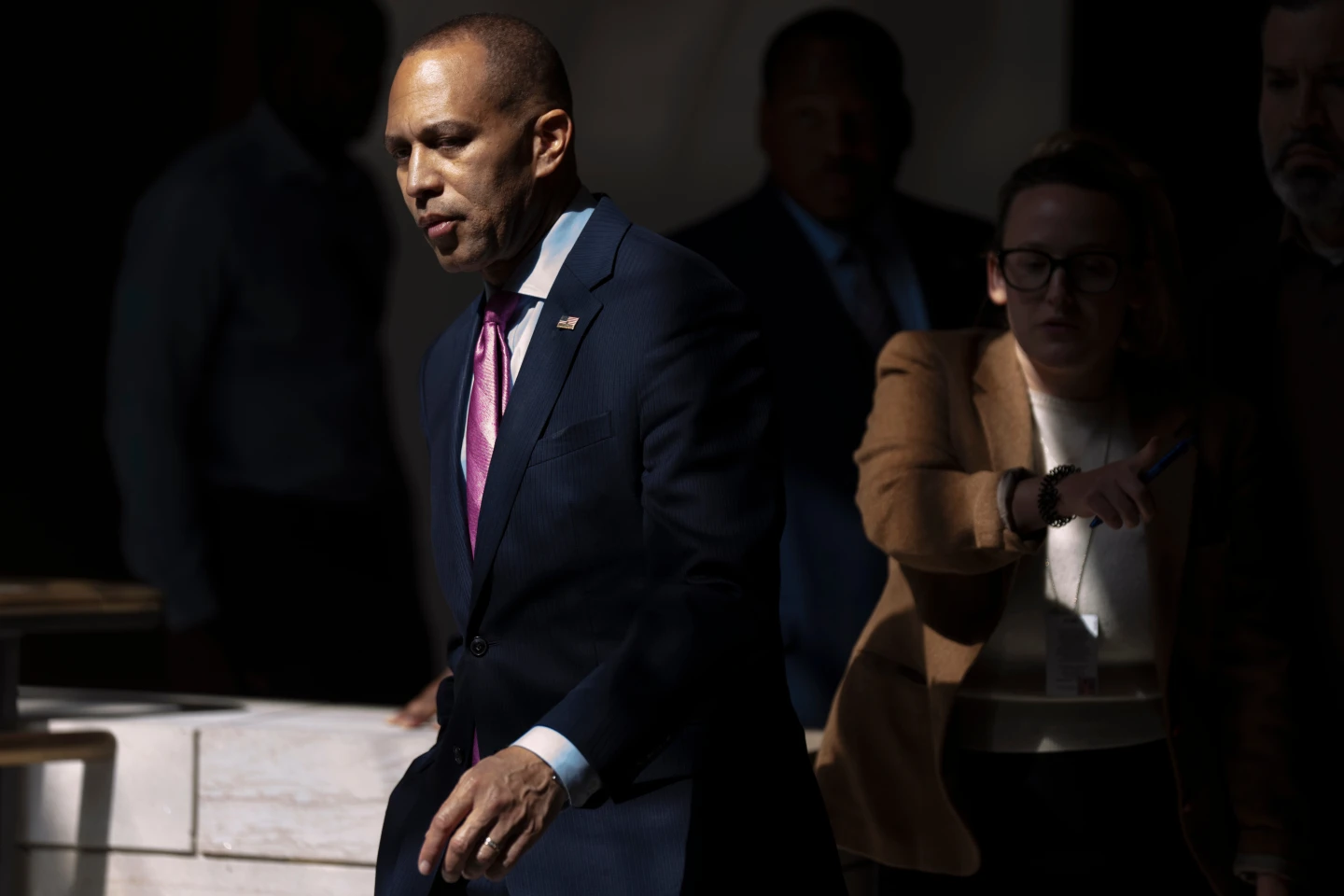
WASHINGTON (AP) — Senate Democrats kept their promise to reject any Republican spending bill that didn’t extend or restore health care benefits, choosing instead to force a government shutdown. Now they have to figure out how to get out of it.
Just hours after the shutdown began, Senate Democratic Leader Chuck Schumer said that if the Republicans work with them, “the shutdown could go away very quickly.”
But that won’t be easy. Republican leaders — Senate Majority Leader John Thune, House Speaker Mike Johnson, and President Donald Trump — have said that they won’t negotiate or be “held hostage” by Democrats demanding concessions to reopen the government. The bill Democrats voted against was a simple extension of funding for 45 days, legislation they say should be noncontroversial.
While that uncompromising Republican position may not last long — there were some early, informal talks on the Senate floor Wednesday — reaching a deal would be difficult. It’s deeply uncertain, for now, if the two sides could find common ground on health care policy.
An extended shutdown could be increasingly painful for Democrats. The Trump administration has threatened to lay off thousands of workers and target Democratic-leaning states. On Wednesday, the White House announced it was putting a hold on subway and tunnel projects in Schumer’s home state of New York.
“This Democrat shutdown is actually delaying progress on the issues that Democrats claim to be interested in,” Thune said on the Senate floor.
Some wavering Democrats emerge in shutdown saga
Republicans were encouraged Tuesday evening when three Democrats voted with them to keep the government open — Democratic Sens. John Fetterman of Pennsylvania and Catherine Cortez Masto of Nevada and Independent Sen. Angus King of Maine.
Republicans, who hold the majority, need eight Democrats to win the 60 votes needed for passage in the 53-47 Senate. Kentucky Sen. Rand Paul was the only Republican to vote with Democrats against the measure.
Thune is holding repeated votes on the measure, which failed 55-45 on Tuesday night and again Wednesday morning. He said he hopes that five Democrats will eventually feel the pressure and support the bill “when they realize that this is playing a losing hand.”
As some Democrats look for a path out, others argue for a harder stance. “As Donald Trump’s lawlessness grows during this shutdown, our spines should stiffen, not bend,” said Sen. Chris Murphy.
Democrats have demanded that Republicans immediately extend health care subsidies for individuals purchasing coverage through the Affordable Care Act. The expanded subsidies are set to expire at the end of the year, raising premium costs for millions.
The political landscape is fraught with uncertainty as past shutdowns have shown that leveraging government closures for major concessions often backfires, leaving the American public bearing the brunt of the turmoil.