In brief
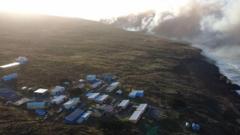
For nearly a month, Amsterdam Island, located in the Indian Ocean, has been battling devastating wildfires that have scorched over 55% of its land area. Researchers stationed there have been evacuated and efforts are underway to assess the extensive damage and secure the remaining infrastructure.
For almost a month, Amsterdam Island, a French territory located in the southern Indian Ocean, has been engulfed in severe wildfires, burning more than 55% of its 54 square kilometers. The uninhabited island has no permanent residents, but it has hosted scientific researchers since the 1980s, who have now faced an urgent evacuation to Réunion Island.The fires, which reportedly began near the Pointe Bénédicte observatory, were discovered on January 15 by an atmospheric research scientist. A report by the Laboratory for Climate and Environmental Sciences (LCES) revealed that, despite the efforts of the researchers, the fire spread dangerously close to the Martin-de-Viviès research base. A nearby lobster fishing vessel, the Austral, provided timely evacuation for the scientists, who were fortunate it had not departed earlier due to delays in catching its lobster quota.Since the onset of the fire, authorities have been working to control the situation. Evacuated personnel have been relocated to Réunion, a nearby French territory, while French officials prepare for a mission to assess the damages. The environmental consequences of the wildfire remain uncertain, but reports indicate significant destruction to solar panels, food supplies, and communication lines.The unique biodiversity of Amsterdam Island, which supports several breeding species of seals and albatrosses, has raised alarm among conservationists regarding wildlife safety. The island is particularly crucial for the Amsterdam Albatross and holds 84% of the world's yellow-nosed albatross population. Furthermore, its isolated environment makes it a key site for studying atmospheric changes and climate impacts.The fires gained momentum due to dry conditions and strong winds, with gusts reaching up to 40 km/h (24 mph). The recent emergency evacuation marks the first interruption in atmospheric research on the island in 45 years, according to Marc Delotte, the LCES mission director. A reconnaissance mission set out on February 7 with firefighters and technical staff, aimed at securing the research settlement and investigating the cause and spread of the fires, along with restoring vital services like energy and water.