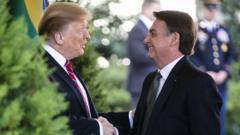
US President Donald Trump's announcement of potentially imposing tariffs on Brazil, with rates hitting up to 50%, has plunged the nations into deep geopolitical discord. The move, characterized by many as a political maneuver to bolster former Brazilian leader Jair Bolsonaro—who is facing prosecution for alleged involvement in a coup attempt—has led to a tense escalation in diplomatic relations.
Trump's harsh rhetoric accused Brazil of unfair actions against US tech companies and a systematic "witch hunt" against Bolsonaro, an ally since the two leaders formed a coalition. This latest provocation is likely a continuation of Trump's wider strategy against the BRICS nations, which include Brazil, China, Russia, and India, highlighting his commitment to counter perceived anti-American sentiment globally.
The Brazilian response to Trump's tariff threats has been firm, with President Luiz Inácio Lula da Silva asserting Brazil's sovereignty in the face of foreign pressures. Lula's administration indicated it would reciprocate if tariffs were enacted against Brazilian goods, but the method and economic implications remain uncertain.
Economically, Brazil is among the few countries that imports more from the US than it exports, making it a target for Trump's agenda focused on strengthening US manufacturing and safeguarding jobs. Yet, Brazilian analysts interpret Trump's move not merely as an economic decision but primarily as a strong signal of support for Bolsonaro, echoing the political ties that had grown between the two before Lula’s return to power.
Opinions are mixed regarding the long-term consequences of Trump's actions for Brazilian politics. While Bolsonaro's supporters are framing the tariffs as a direct consequence of Lula's ideology, others believe that Trump’s aggressive posturing could inadvertently benefit Lula by rallying patriotic sentiments against foreign interventions in Brazilian affairs. This situation leaves Bolsonaro in a precarious position ahead of a future presidential run while potentially giving Lula the political ammunition needed to bolster his own popularity.
Overall, Trump's tariff threat presents both peril and opportunity in Brazil's political landscape, showcasing a theatre of international relations where trade disputes intertwine with national politics, complicating the roadmap for the country's leadership moving forward. The unfolding situation prompts questions about how internal dynamics among Brazilian political factions will shift in response, especially looking toward the upcoming elections.