In brief
Netanyahu's administration conveys a tepid response to the pope's passing, indicative of the ongoing friction between Israeli officials and Vatican statements regarding the Gaza war.
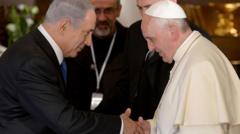
Prime Minister Benjamin Netanyahu's office expressed condolences for Pope Francis four days following his death, an action seen as reflective of the Israeli government's stance toward the pontiff’s comments on the Gaza conflict. Initially, the Israeli state’s social media account had wished to honor the pope with a more affectionate message, which was later deleted, stirring significant controversy.The revised official statement lacked warmth and brevity, stating, "The State of Israel expresses its deepest condolences to the Catholic Church and the Catholic community worldwide at the passing of Pope Francis. May he rest in peace," with no further elaboration. The initial social media post had included an image of Pope Francis at the Western Wall and concluded with "May his memory be a blessing," but this was quickly withdrawn.This decision to retract the previous message, cited as an error by foreign ministry officials to the Jerusalem Post, has led to criticism within Israel. In an effort to mitigate backlash, Israeli officials highlighted that the ambassador to the Vatican had personally conveyed condolences, although his attendance at the funeral will be limited to the ambassador, Yaron Sideman, contrasting starkly with leaders from other countries, such as U.S. President Donald Trump, who are sending higher-ranking representatives. However, the Israeli President Isaac Herzog did pay his respects with a tribute that acknowledged the pope as a figure of deep faith and compassion, yet there are no indications of his attendance at the service, possibly due to its scheduling on Shabbat.The tensions appear to stem from Pope Francis's vocal advocacy for a ceasefire in Gaza and his description of Israel's military actions there. His previous assertions about the humanitarian situation and allegations of genocide have sparked resentment among Israeli officials, particularly those within Netanyahu's nationalistic coalition.As the funeral approaches, the absence of prominent Israeli leadership signals underlying discontent with the Vatican’s outward support for Palestinians, casting a shadow over the relationship between the two entities. Palestinian representatives, in contrast, regard the pope as a beacon of hope and resilience amidst their struggles, further deepening the divide as they prepare to honor their shared voice of solidarity on the global stage.