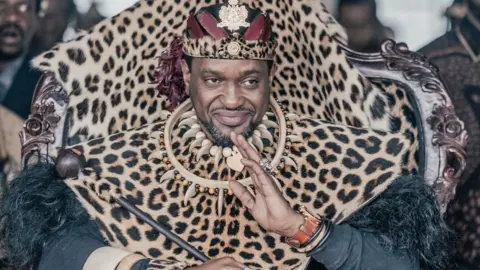
South Africa's Zulu king, Misuzulu kaZwelithini, has stirred controversy with remarks made during a highly anticipated speech, declaring that all foreign migrants must leave the country. Specifically, he used a derogatory term for African migrants and suggested that even those integrated into South African communities, such as having South African partners and children, should depart.
The speech took place at Isandlwana, a historic site where Zulu warriors famously defeated British forces in 1879, which adds a layer of historical resonance to his comments. Many Zulus view the battle as a symbol of resistance against foreign invaders, making the current sentiments against migrants deeply complex.
King Misuzulu's comments have ignited backlash, particularly as his own family has migrant roots; his mother was from Eswatini and he has wives from neighboring nations. His speech has been interpreted as a reaction to rising economic frustrations in South Africa, where unemployment hovers around 33%. This narrative has fueled anti-migrant sentiments, positioning foreigners as scapegoats for local job shortages and public service strains.
Notably, xenophobic attitudes are not new in South Africa, with past occurrences leading to violence against migrants. The king's remarks seem to echo sentiments previously expressed by his late father, who urged migrants to 'pack their belongings' back in 2015. Critics argue that such language could incite violence, undermining the king's position as a respected leader.
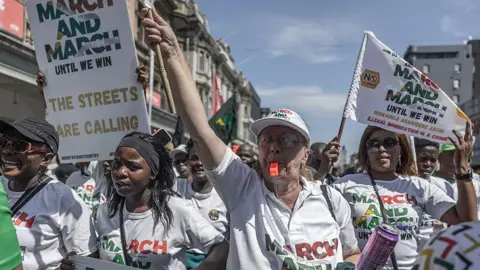
Moreover, in the political sphere, anti-migrant movements have gained traction, with groups like Operation Dudula demanding the removal of undocumented foreigners from public services. This growing xenophobic rhetoric is compounded by protests against migrant children in schools, where misinformation claimed foreign pupils made up the majority.
Alongside xenophobic remarks, King Misuzulu has also called for the renaming of KwaZulu-Natal, removing 'Natal' from its title—another assertion reflecting his father's wishes. This proposal may provoke divisive nationalism amidst South Africa's diverse cultural landscape.
As South Africa grapples with its migrant policies, the recent comments by King Misuzulu underline the ongoing struggle between national identity and inclusivity in a country still healing from its apartheid past.
The speech took place at Isandlwana, a historic site where Zulu warriors famously defeated British forces in 1879, which adds a layer of historical resonance to his comments. Many Zulus view the battle as a symbol of resistance against foreign invaders, making the current sentiments against migrants deeply complex.
King Misuzulu's comments have ignited backlash, particularly as his own family has migrant roots; his mother was from Eswatini and he has wives from neighboring nations. His speech has been interpreted as a reaction to rising economic frustrations in South Africa, where unemployment hovers around 33%. This narrative has fueled anti-migrant sentiments, positioning foreigners as scapegoats for local job shortages and public service strains.
Notably, xenophobic attitudes are not new in South Africa, with past occurrences leading to violence against migrants. The king's remarks seem to echo sentiments previously expressed by his late father, who urged migrants to 'pack their belongings' back in 2015. Critics argue that such language could incite violence, undermining the king's position as a respected leader.
Moreover, in the political sphere, anti-migrant movements have gained traction, with groups like Operation Dudula demanding the removal of undocumented foreigners from public services. This growing xenophobic rhetoric is compounded by protests against migrant children in schools, where misinformation claimed foreign pupils made up the majority.
Alongside xenophobic remarks, King Misuzulu has also called for the renaming of KwaZulu-Natal, removing 'Natal' from its title—another assertion reflecting his father's wishes. This proposal may provoke divisive nationalism amidst South Africa's diverse cultural landscape.
As South Africa grapples with its migrant policies, the recent comments by King Misuzulu underline the ongoing struggle between national identity and inclusivity in a country still healing from its apartheid past.