In brief
As Poland braces for its presidential election, the competition between Rafal Trzaskowski and Karol Nawrocki marks a potential shift in the political landscape. Voter fatigue with established parties is evident, and a run-off is anticipated, shaping the future direction of the government amid concerns over liberal values and national interests.
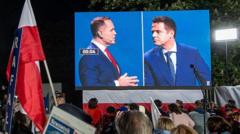
With Poland preparing for its presidential election on Sunday, significant political stakes are at play, with candidates Rafal Trzaskowski and Karol Nawrocki poised as the front-runners among 13 hopefuls. Trzaskowski, the liberal mayor of Warsaw and a figure within the Civic Platform party, is expected to square off against the national-conservative historian Nawrocki, representing the opposition Law and Justice party. Polls indicate that neither candidate may secure the necessary majority to avoid a runoff, setting the stage for a pivotal contest on June 1.Trzaskowski's coalition has faced ongoing challenges since taking power in late 2023, including dissatisfaction over unfulfilled promises like liberalizing abortion laws and addressing migration. Meanwhile, critics view the scenario as a binary choice between authoritarian populism and morally corrupt liberalism, sparking frustration among voters. Commentators, like Konstanty Gebert, express concerns about dwindling focus on issues such as LGBTQ+ rights and social justice, heightening the anxiety surrounding an authoritarian resurgence.Under President Andrzej Duda's two-term influence, fears of a potential rollback in liberal democracy have emerged. The presidential office wielded significant power, particularly in vetoing legislation, complicating governance for Tusk's coalition, lacking the majority to counter Duda's executive actions. Tusk's leadership is under scrutiny, particularly given recent controversies, including allegations of Russian hacking against government websites and issues concerning Poland's immigration policies.As election day approaches, both front-runners are grappling with allegations that may impact their public perception. Nawrocki has faced criticism regarding a discounted property acquisition from a vulnerable pensioner, although polls suggest this hasn't significantly jeopardized his standing. Meanwhile, dissatisfaction with traditional party politics has given rise to alternative candidates, such as the far-right libertarian Slawomir Mentzen, who initially gained traction but saw support wane following controversial statements on abortion.The election is stirring mixed feelings among voters, with many expressing apathy toward both major parties, resonating with sentiments expressed by ordinary citizens like Malgorzata Szuleka, who yearn for productive dialogue rather than polarized posturing. As tensions rise, Poland stands at a crossroads, with its forthcoming presidential election poised to influence its political trajectory for years to come.