In brief
Prime Minister François Bayrou, who was appointed less than a year ago, is facing a critical confidence vote in the National Assembly on Monday. With rivalry and disunity in parliament, his government is at risk, while pressing financial challenges loom over France. Bayrou seeks to implement significant budget cuts to address the country's deficit but may be unable to secure the necessary votes to stay in power. The outcome could further complicate the political landscape for President Emmanuel Macron, who would need to seek yet another successor.
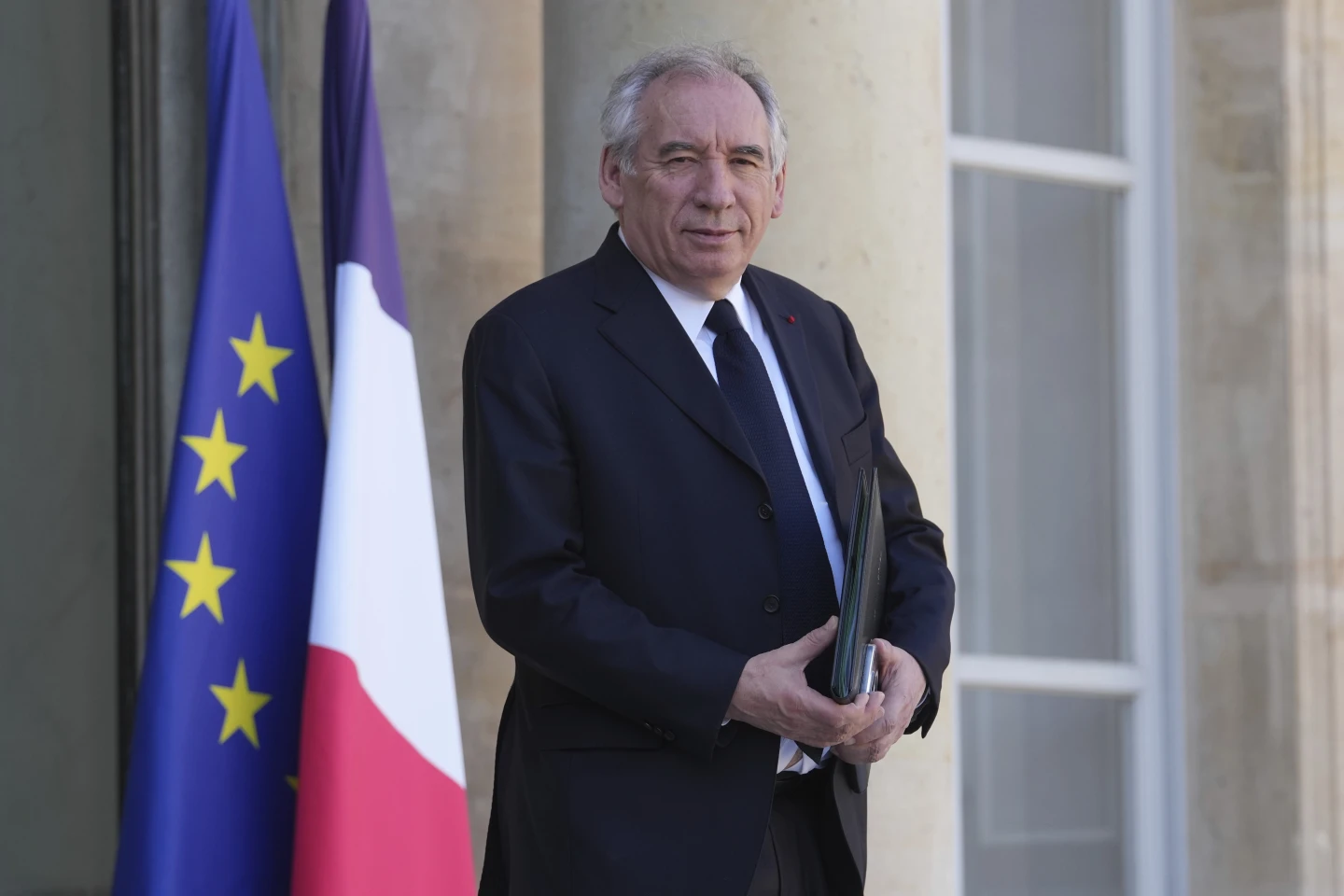
PARIS (AP) — France risks losing its third prime minister in 12 months on Monday, with incumbent François Bayrou facing a parliamentary confidence vote that he called but is widely expected to lose, heralding more instability for the European Union’s second-largest economy.
The 74-year-old centrist prime minister, appointed by President Emmanuel Macron just under nine months ago, is gambling that the vote will unite lawmakers in the sharply divided National Assembly behind proposed public spending cuts that Bayrou argues are needed to rein in France’s spiraling state deficit and debts.
But opposition lawmakers are vowing to instead use the opportunity to topple Bayrou and his minority government of centrist and right-wing ministers, an upheaval that would force Macron to begin what could be another arduous hunt for a replacement.
A key vote
The National Assembly of 577 lawmakers is interrupting its summer recess for the extraordinary session that Bayrou requested, starting at 3 p.m. (1300 GMT; 0900 EDT) Monday.
After Bayrou delivers a speech that is expected to argue that belt-tightening is in the national interest, lawmakers will have their say before they vote either for or against his government — likely in the late afternoon or early evening. Lawmakers can also abstain.
Bayrou needs a majority of “for” votes to survive. If a majority votes against, France’s constitution decrees that Bayrou would have to submit his government’s resignation to Macron, plunging France into renewed crisis.
Musical chairs
The 47-year-old president is paying a steep price for his stunning decision to dissolve the National Assembly in June 2024, triggering legislative elections that the French leader hoped would strengthen the hand of his pro-European centrist alliance in parliament’s lower house. But the gamble backfired, producing a splintered legislature with no dominant political bloc in power for the first time in France’s modern republic.
The political uncertainty has largely hobbled Macron’s domestic ambitions in his second and last presidential term that ends in 2027. Shorn of a workable majority in parliament for his centrist alliance, Macron has since rotated through three prime ministers, attempting to build consensus and stave off government collapse.
Macron’s protégé Gabriel Attal departed in September 2024, after the Paris Olympics and just eight months in the job. Attal was briefly followed by former Brexit negotiator Michel Barnier, a conservative who became the shortest-serving prime minister in France’s modern republic when he was toppled by a no-confidence vote in December.
Macron then tapped his centrist ally Bayrou, a wily political veteran who, despite his experience, is now up against the same wall of unfavorable parliamentary mathematics in the National Assembly — where no single political grouping has sufficient seats to govern alone but can still pull the rug from under the government if they team up, targeting Bayrou together despite their sharp political differences.
Bayrou’s frustration
Far-right and left-wing lawmakers who say they’ll vote against Bayrou’s government hold over 320 seats while centrists and allied conservatives have 210, making it seemingly impossible for the prime minister to survive.
Bayrou expressed frustration Sunday that bitter rivals on the opposite ends of the political spectrum in the National Assembly are ganging up against him.
“What’s the point of bringing down the government? These are political groups that not only don’t agree on anything but, far worse than that, are waging open civil war against each other,” he said in an interview with online media outlet Brut.
Pressing problems for France
If Bayrou loses, Macron will again be forced to find a successor who’ll operate in the same precarious environment and face the same pressing budget problems that have dogged Bayrou and his predecessors. Macron himself has vowed to stay in office until the end of his term but risks becoming a lame duck domestically if political paralysis continues.
Under the French political system, the prime minister is appointed by the president, accountable to the parliament and is in charge of implementing domestic policy, notably economic measures. The president holds substantial powers over foreign policy and European affairs and is the commander-in-chief of the armed forces.
Arguing that sharp cuts are needed to repair public finances, Bayrou has proposed to cut 44 billion euros ($51 billion) in spending in 2026, after France’s deficit hit 5.8% of gross domestic product last year, way above the official EU target of 3%.
France is also faced with a massive debt crisis. At the end of the first quarter of 2025, France’s public debt stood at 3.346 trillion euros, or 114% of GDP. Debt servicing remains a major budget item, accounting for around 7% of state spending.
Bayrou’s plan, which includes removing two public holidays, has been slammed by his political rivals, who now have a golden opportunity to bring him down.