In brief
Tensions between the EU and China are at an all-time high, reflecting upon trade imbalances and differing views on the Russia-Ukraine conflict, highlighted during a recent summit in Beijing.
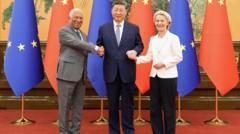
European Commission President Ursula von der Leyen stated that EU-China relations have reached an "inflection point" during discussions with Chinese President Xi Jinping at a summit held in Beijing. She addressed concerns over a significant trade deficit, which last year reached approximately €305.8 billion ($360 billion), nearly doubling over the past nine years. Von der Leyen emphasized the need for cooperation to stabilize the relationship while acknowledging ongoing imbalances.Xi Jinping insisted the issues facing Europe are not stemming from China, urging EU leaders to "properly manage differences" during their one-day summit. Despite previous hopes for improved relations, particularly in light of discussions about a potential Trump presidency, tensions have escalated, with many anticipating little resolution from this meeting. The summit was notably shortened at China's request.During their exchange, both leaders highlighted the need for practical solutions, underscoring the importance of recognizing mutual concerns. Xi stressed that isolationist strategies and supply chain severance would be detrimental. Meanwhile, von der Leyen pointed out the significance of rebalancing trade dynamics, advocating for better market access for EU companies in China and mitigating export controls.The context for these discussions is notably charged, particularly after the EU imposed sanctions on two Chinese banks for aiding Russia. This decision has further strained relations, as Xi has increasingly sought collaboration while maintaining ties with Moscow. Reports suggest Chinese officials expressed a desire for Russia to continue its involvement in the Ukraine conflict, contradicting their publicly stated neutral position.The sentiment following the summit reflects a growing mistrust, with observers noting an atmosphere described as "tense - if not frosty." Various trade disputes, including the EU's tariffs on Chinese electric vehicles and retaliatory duties from Beijing, have contributed to this deterioration. Both sides are grappling with the implications of their economic interactions, complicated by geopolitical realities, including China's role in the ongoing war in Ukraine.Economically, the EU voices frustration over cheap, subsidized Chinese imports affecting local industries, while Beijing criticizes the EU's inconsistent stance—labeling China as both a partner and a rival, which leads to confusion and barriers in trade relations. Looking forward, both nations must navigate these complexities to foster a more balanced, constructive partnership.