In brief
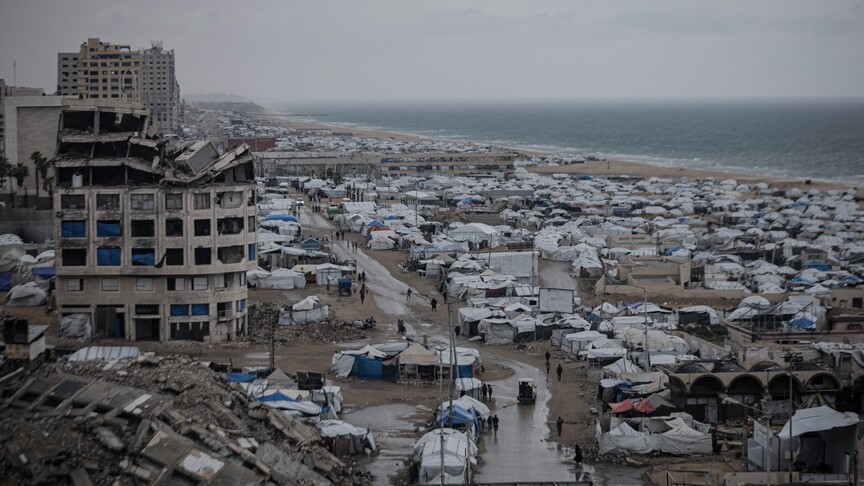
As Israel imposes a ban on the United Nations Relief and Works Agency (UNRWA), residents in war-torn Gaza express deep concerns over their survival. With already critical shortages of food and medical care, the move threatens to exacerbate the humanitarian crisis, particularly for the six million Palestinians relying on the agency's support across the region.
In war-ravaged Gaza, the specter of a heightened humanitarian crisis looms ominously as many locals voice their fears regarding Israel's new legislation aimed at blocking the operations of UNRWA, the United Nations agency responsible for aiding Palestinian refugees. Yasmine el-Ashry from Khan Younis articulated her despair, stating, "Unrwa means everything to us: it is our life, our food, our drink, and our medical care." She emphasized the dire consequences of a potential closure, questioning where she would seek help if her son fell ill.The political landscape in Israel has witnessed a surge of support for the legislation targeting UNRWA, seen as a violation against Palestinian rights by many, including registered refugee Saeed Awida, who affirmed, "Banning Unrwa is another war for the Palestinian people." Israeli officials have accused the agency of being infiltrated by Hamas, a claim echoed by Sharren Haskel, a member of the opposition National Unity Party, who insisted on the necessity of these actions to protect Israeli citizens.Despite UNRWA’s assertions of neutrality, the potential implementation of these laws raises alarms about their operational capacity in Gaza. Sam Rose, UNRWA’s Gaza deputy director, warned that these restrictions would inhibit the agency's supply delivery and movement, ultimately jeopardizing the safety of schools and clinics that shelter thousands of displaced individuals.Warnings from the Israeli diplomatic and security sectors regarding the implications of such a ban have been largely disregarded, as domestic political priorities continue to overshadow humanitarian considerations. Established in 1949 post the first Arab-Israeli war, UNRWA initially aided 700,000 Palestinians; now, it supports approximately six million across the region, providing essential aid and services.Criticism directed at UNRWA has intensified, particularly since the escalation of violence following Hamas’s October attack. Allegations have emerged linking some of the agency’s employees to militant activities, prompting investigations and firings. Yet, UN officials argue that issues relating to refugee status demand resolution through diplomatic negotiations rather than punitive actions.In a territory densely populated by registered refugees, the implications of Israel's stance against UNRWA pose serious threats to their future. Mohammed Salman from Deir al-Balah emphasized the risks of erasing the identity tied to the word "refugee," reflecting a broader fear of the negation of Palestinian rights amid ongoing conflict.