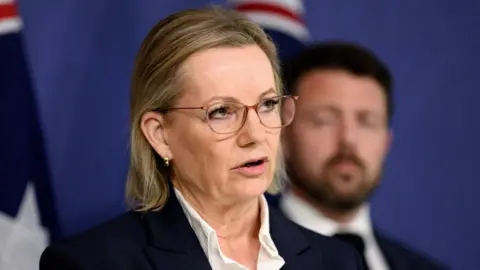
Australia’s Liberal-National Coalition, the primary opposition party, has officially reunited after more than two weeks of division over controversial hate-speech legislation. Liberal Party leader Sussan Ley announced the coalition's unification in Canberra, stating, The Coalition is back together and looking to the future, not to the past.
The rift began on January 22 when the National Party, referencing concerns about free speech, refrained from supporting reforms related to hate speech in the wake of targeted attacks that left 15 dead during a Jewish festival at Bondi Beach last December.
National Party leader David Littleproud noted the disappointment stemming from the split, highlighting that the disagreements were over substantive issues. The Coalition has recently faced tremendous challenges, including a significant election loss last year and another split in 2022 over differing views on climate and energy policies.
This current division arose as the center-left Labor government proposed legislation to ban organizations perceived to promote hate and increase penalties for violent encouragement, leading the Liberals to side with the government while the Nationals protested the rushed nature of the legislation.
Ley emphasized the responsibility of the coalition to regain trust and power, acknowledging the tough times experienced by supporters. Both parties underscored their agreement on collaborative decision-making within the new shadow cabinet framework that aims to prevent future unilateral actions.
Dating back to the 1940s, this event marks a brief return to conflict for the coalition, which had not experienced such a fracture since 1987. As the Coalition navigates this path forward, it faces increasing pressure from growing populist sentiments within the Australian political landscape.
The rift began on January 22 when the National Party, referencing concerns about free speech, refrained from supporting reforms related to hate speech in the wake of targeted attacks that left 15 dead during a Jewish festival at Bondi Beach last December.
National Party leader David Littleproud noted the disappointment stemming from the split, highlighting that the disagreements were over substantive issues. The Coalition has recently faced tremendous challenges, including a significant election loss last year and another split in 2022 over differing views on climate and energy policies.
This current division arose as the center-left Labor government proposed legislation to ban organizations perceived to promote hate and increase penalties for violent encouragement, leading the Liberals to side with the government while the Nationals protested the rushed nature of the legislation.
Ley emphasized the responsibility of the coalition to regain trust and power, acknowledging the tough times experienced by supporters. Both parties underscored their agreement on collaborative decision-making within the new shadow cabinet framework that aims to prevent future unilateral actions.
Dating back to the 1940s, this event marks a brief return to conflict for the coalition, which had not experienced such a fracture since 1987. As the Coalition navigates this path forward, it faces increasing pressure from growing populist sentiments within the Australian political landscape.