In brief
Amid increasing military control, Pakistan's former Prime Minister Imran Khan and various dissenting voices face severe repression. Khan has been denied visits and communication from family and lawyers, while human rights lawyers like Imaan Mazari are jailed for political dissent. The situation raises concerns of authoritarianism within the civilian government and highlights the broader implications for free speech and legal rights in Pakistan.
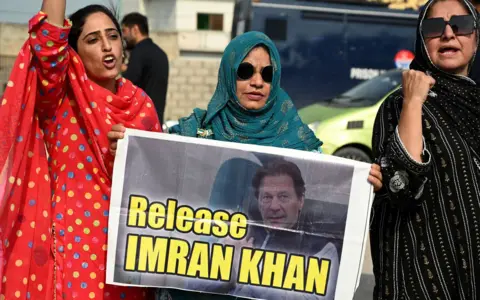
Pakistan's jailed former prime minister Imran Khan hasn't seen any visitors in over five weeks, raising alarms from his party and family about censorship by the military. They claim that the military chief, Field Marshall Asim Munir, is responsible for preventing Khan's communication with the outside world, though the government insists the lack of visits is due to Khan breaking jail rules against political discussions.
The crackdown on dissent is not limited to Khan. Journalists, analysts, and human rights advocates report an increasingly hostile environment where freedom of expression is tightly monitored. For instance, human rights lawyer Imaan Mazari and her husband were recently sentenced to ten years in prison for sharing anti-state posts on social media.
With Khan's voice suppressed, his family claims a systematic attempt to erase his presence from public discourse. Khan's sister, Aleema Khanum, publicly stated the media is essentially barred from mentioning her brother's name positively or criticizing Munir. This silencing tactic extends even to mainstream media, where discussions about Khan are stifled due to fears of repercussions.
The military's grip on the state's narrative is further evidenced by their response to Khan's social media activity, which has encompassed sharp critiques of the government and military leadership. Reports suggest that any criticism against the army has dire consequences; a recent amendment granted Munir lifetime immunity from prosecution, signaling a consolidation of military power under civilian governance.
Experts warn that the current political climate in Pakistan reflects resorting to authoritarian methods in suppressing dissent, further deteriorating the country's democratic fabric. While Khan remains a significant figure, the increased repression of dissenting voices indicates a broader concern for human rights and freedom of expression in Pakistan.