In brief
Tyson Foods has announced the closure of its beef processing plant in Lexington, Nebraska, affecting around 3,200 jobs in the small city. This reduction in workforce and capacity could disrupt the agricultural supply chain and impact ranchers across the country. Local leaders describe the decision as a devastating blow, prompting fears about the community's economic stability. In conjunction with job losses in Amarillo, Texas, the closures will reduce nationwide beef processing by about 7-9%. As beef imports increase and ranchers face high operational costs, the future of the U.S. cattle business remains uncertain, with potential repercussions for consumer prices.
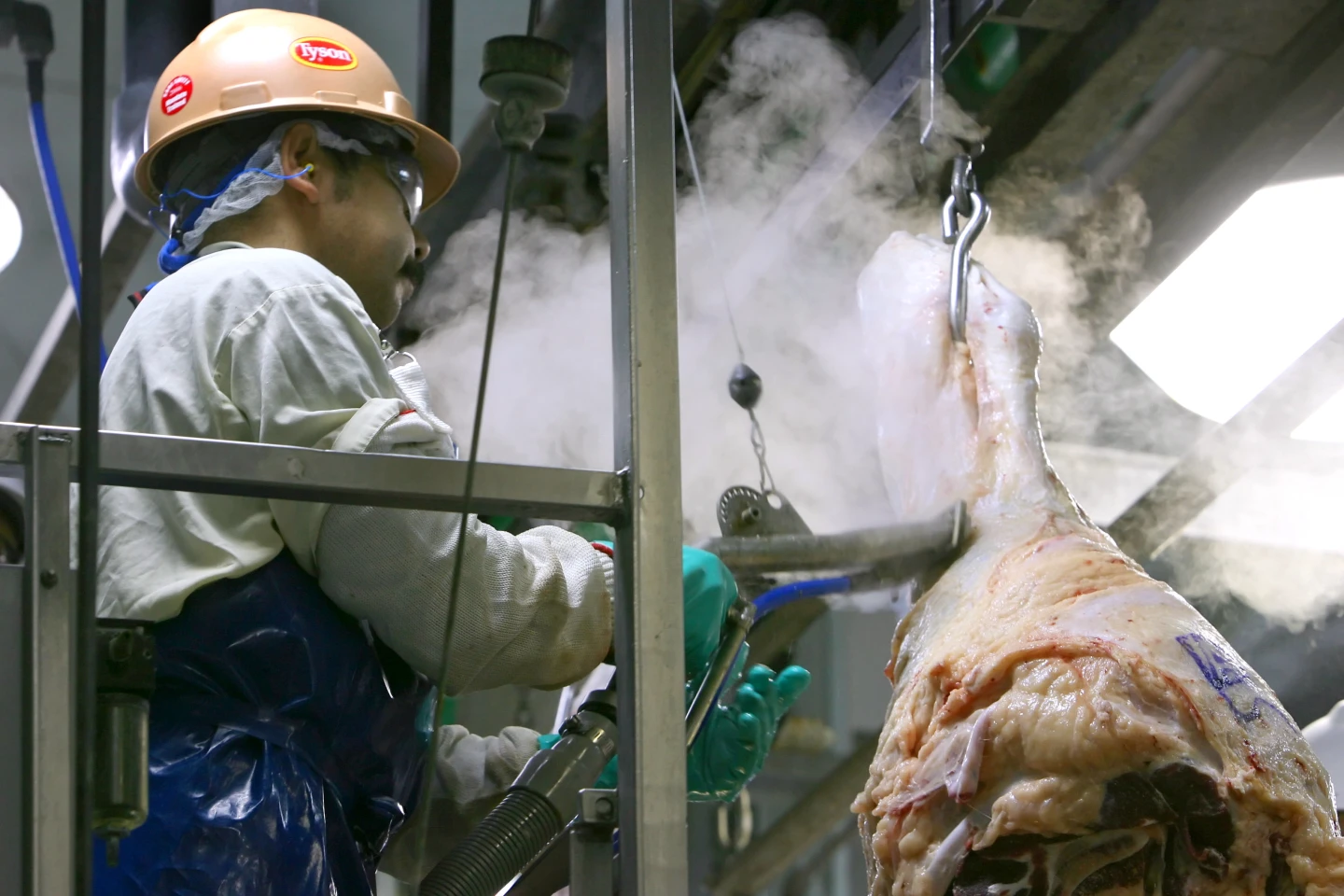
OMAHA, Neb. (AP) — Tyson Foods’ decision to close a beef plant that employs nearly one third of residents of Lexington, Nebraska, could devastate the small city and undermine the profits of ranchers nationwide.
Closing a single slaughterhouse might not seem significant, but the Lexington plant employs roughly 3,200 people in the city of 11,000 and has the capacity to slaughter some 5,000 head of cattle a day. Tyson also plans to cut one of the two shifts at a plant in Amarillo, Texas, and eliminate 1,700 jobs there. Together those two moves will reduce beef processing capacity nationwide by 7-9%.
Consumers may not see prices change much at the grocery store over the next six months because all the cattle that are now being prepared for slaughter will still be processed, potentially just at a different plant. But in the long run, beef prices may continue to climb even higher than the current record highs — caused by a variety of factors from drought to tariffs — unless American ranchers decide to raise more cattle, which they have little incentive to do.
An increase in beef imports from Brazil, like President Donald Trump encouraged last week by slashing tariffs on the South American country, may help insulate consumers while ranchers and feedlots struggle with high costs and falling prices.
A ‘gut punch’ to the community described Clay Patton, vice president of the Lexington-area Chamber of Commerce, who lamented the devastation to a key link in the agricultural production chain.
The closure will jeopardize the livelihoods of many first-generation business owners, just as the plant has revitalized the town since its opening in 1990.
As the community braces for hardship, the future remains uncertain amid a lack of confidence in the cattle industry.
For more details on this developing story, stay tuned to FlashPoint for all future updates.