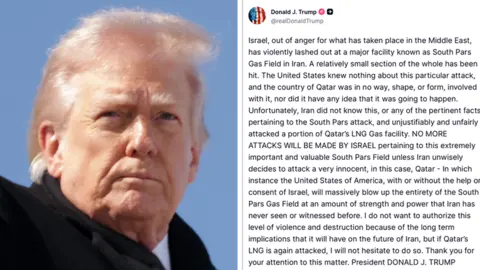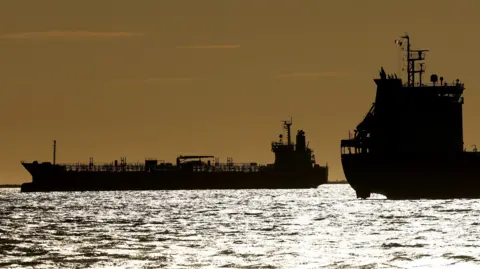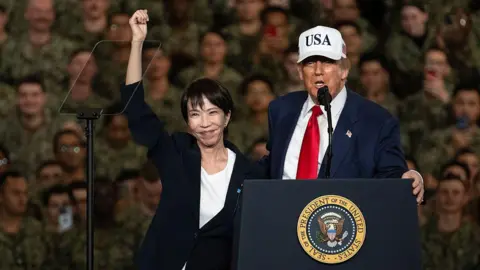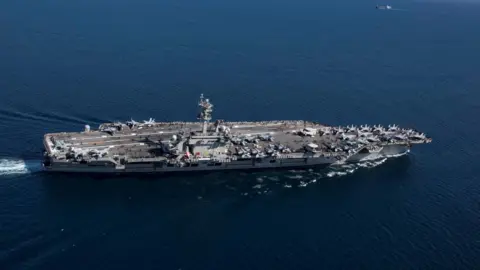
Donald Trump has warned Iran that 'time is running out' to negotiate a deal on its nuclear programme following the steady build-up of US military forces in the Gulf. The US president stated a 'massive Armada' was 'moving quickly, with great power, enthusiasm, and purpose' towards Iran, referring to a large US naval fleet.
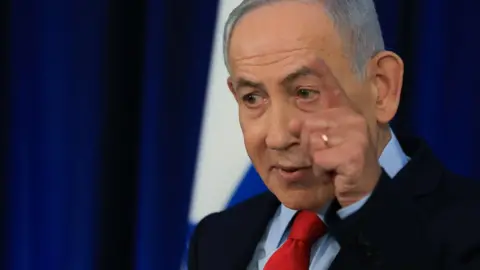
In response to Trump's statements, Iran's Foreign Minister Abbas Araghchi announced that the country’s armed forces were prepared 'with their fingers on the trigger' to respond swiftly and decisively to any aggression. Iran maintains that its nuclear program is strictly peaceful and denies allegations from the US and its allies of pursuing nuclear weapons.
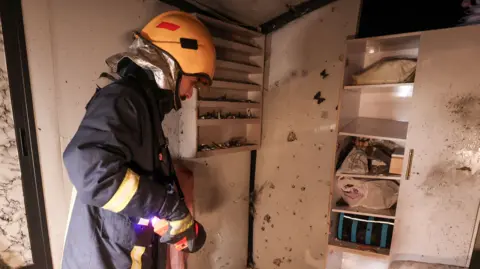
Trump's latest remarks come amid ongoing protests within Iran, triggered by a sharp decline in the national currency, which has evolved into a legitimacy crisis for the ruling clerics. He had previously promised support for those protesting the crackdown on dissent, suggesting that help was on the way—though he later claimed that executions of demonstrators had ceased.
Reports from the Human Rights Activists News Agency (HRANA) estimate more than 6,300 deaths since the onset of these protests, raising concerns over the Iranian regime's handling of civil unrest.
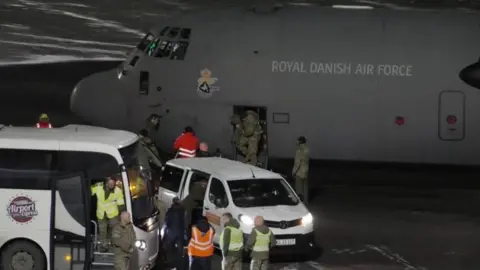
As the US amplifies its military posture in the region, analyzing satellite imagery has confirmed increased deployments, including 15 fighter jets to Jordan, along with additional personnel and assets at bases across the Middle East.
Tehran, in tandem with these developments, asserts its right to a nuclear deal that respects its interests and follows fair negotiation without external coercion—a sentiment echoed by other Iranian officials who remain skeptical of US intentions.
As tensions escalate, both parties seem poised for a pivotal confrontation about Iran's nuclear capabilities, with the US demanding cease of uranium enrichment and limitations on missile defenses as part of any renewed agreement.
In response to Trump's statements, Iran's Foreign Minister Abbas Araghchi announced that the country’s armed forces were prepared 'with their fingers on the trigger' to respond swiftly and decisively to any aggression. Iran maintains that its nuclear program is strictly peaceful and denies allegations from the US and its allies of pursuing nuclear weapons.
Trump's latest remarks come amid ongoing protests within Iran, triggered by a sharp decline in the national currency, which has evolved into a legitimacy crisis for the ruling clerics. He had previously promised support for those protesting the crackdown on dissent, suggesting that help was on the way—though he later claimed that executions of demonstrators had ceased.
Reports from the Human Rights Activists News Agency (HRANA) estimate more than 6,300 deaths since the onset of these protests, raising concerns over the Iranian regime's handling of civil unrest.
As the US amplifies its military posture in the region, analyzing satellite imagery has confirmed increased deployments, including 15 fighter jets to Jordan, along with additional personnel and assets at bases across the Middle East.
Tehran, in tandem with these developments, asserts its right to a nuclear deal that respects its interests and follows fair negotiation without external coercion—a sentiment echoed by other Iranian officials who remain skeptical of US intentions.
As tensions escalate, both parties seem poised for a pivotal confrontation about Iran's nuclear capabilities, with the US demanding cease of uranium enrichment and limitations on missile defenses as part of any renewed agreement.