In brief
In New Town, North Dakota, students at Nueta Hidatsa Sahnish College engage in food sovereignty programs that reflect their cultural heritage. Amid proposed funding cuts from the Trump administration, leaders of tribal colleges express concern over maintaining the educational support necessary for passing Indigenous knowledge to future generations. While recent funding increases from the Department of Education provide a glimmer of hope, uncertainties remain about the stability of federal support for these crucial institutions.
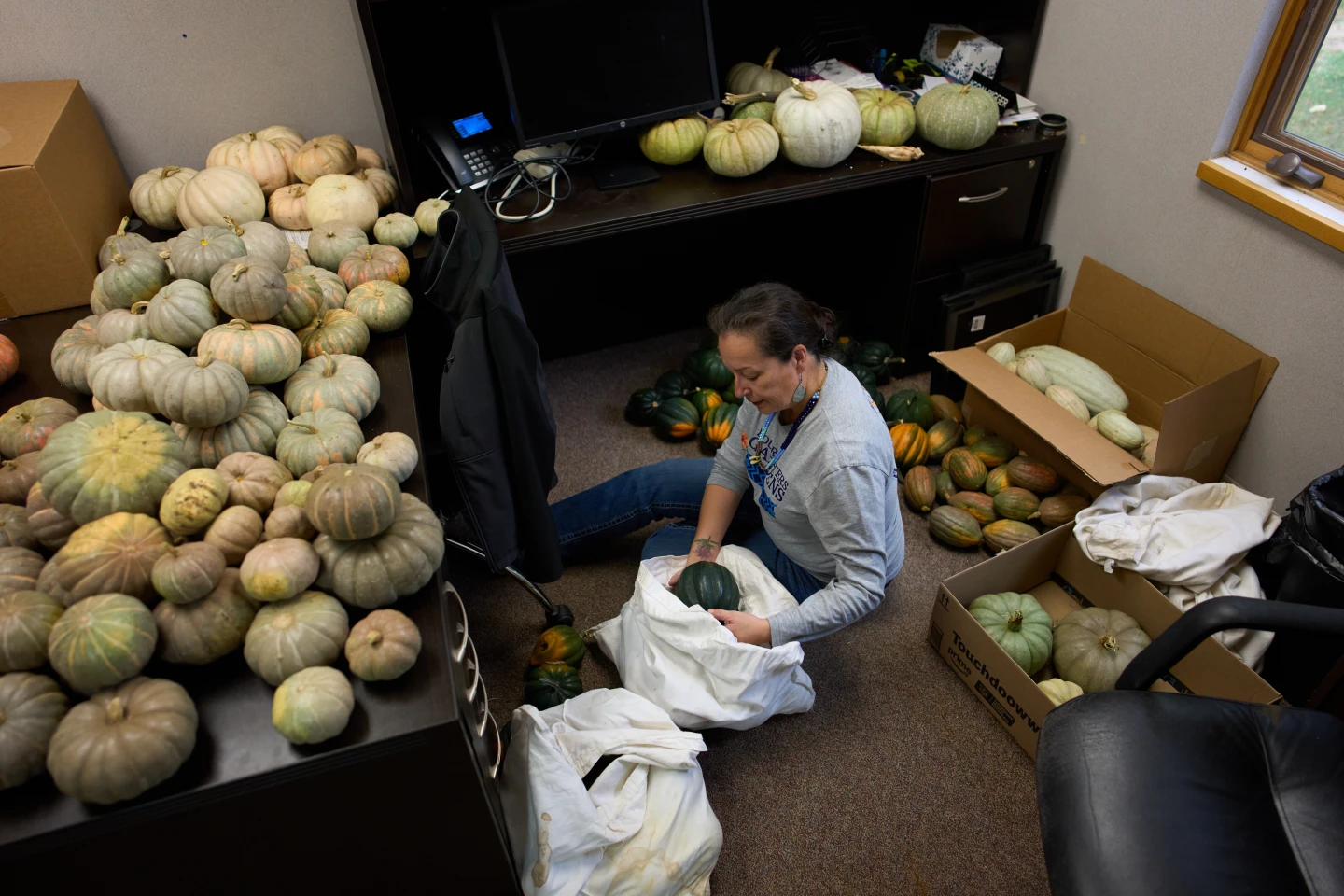
NEW TOWN, N.D. (AP) — On a recent chilly fall morning, Ruth De La Cruz walked through the Four Sisters Garden, looking for Hidatsa squash. To college students in her food sovereignty program, the crop might be an assignment. But to her, it is the literal fruit of her ancestors’ labor.
“There’s some of the squash, yay,” De La Cruz exclaimed as she found the small, pumpkinlike gourds catching the morning sun. The garden is named for the Hidatsa practice of growing squash, corn, sunflower, and beans — the four sisters — together, De La Cruz said. The program is part of the Nueta Hidatsa Sahnish College, operated by the Mandan Hidatsa Arikara Nation.
More than three dozen tribal colleges and universities across the country face potential funding cuts as proposed by the Trump administration earlier this year. Tribal citizens are navigating through the impacts of cuts in federal spending and the longest government shutdown in U.S. history.
A funding increase for tribal colleges and universities announced before the shutdown brought some relief, but concerns linger about the commitment of federal support. College leaders emphasize that the funding is crucial for passing on Indigenous knowledge and culture.
When the U.S. government engaged in the seizure of tribal lands, it made commitments to protect the education and well-being of Indigenous peoples through treaties. Today, those commitments are referred to as 'trust responsibilities.' Twyla Baker, the college's president, highlighted the historical context, stating, “We prepaid for all of this.”
Although some funding has increased, the overall outlook remains uncertain. Ahniwake Rose, president of the American Indian Higher Education Consortium, mentioned that federal funding, like grants from the National Science Foundation, has been decreased, leading to ongoing stress in budgeting.
Presidents of tribal colleges, including Baker and Leander McDonald, frequently travel to Washington D.C. to advocate for their institutions. Despite generating billions in economic impact, the threat of funding cuts continues to loom.
For students at TCU, the educational experience goes beyond academics; it's about preserving their cultural identity and traditions. The Native American Studies program at Nueta Hidatsa Sahnish College allows students to learn directly from elders, ensuring that the cultural knowledge is retained and passed down.
As the landscape continues to evolve, the commitment to Indigenous education remains critical for the future of tribal nations.