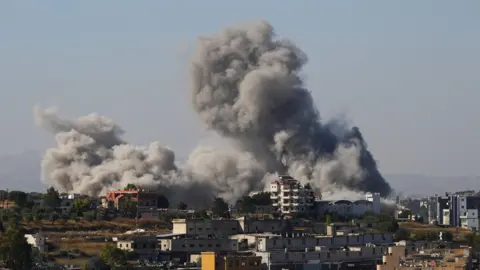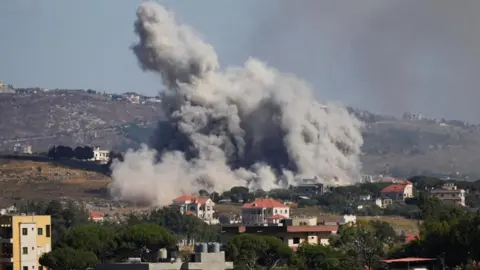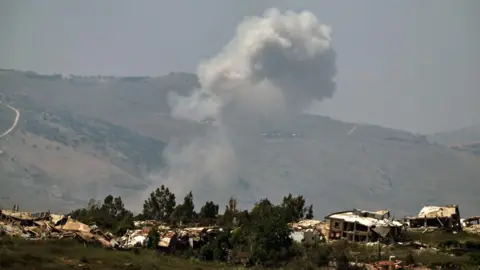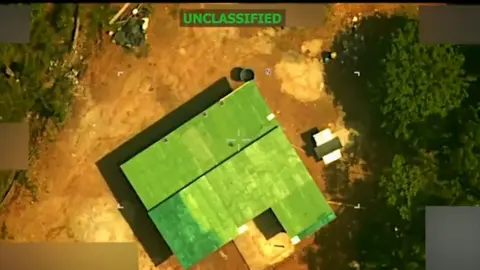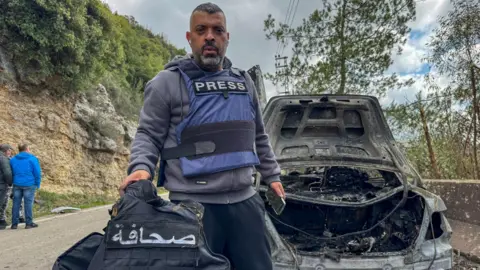
Three Lebanese journalists were tragically killed in a targeted Israeli strike in southern Lebanon on Saturday. According to their respective media organizations, Ali Shoeib, a reporter for Hezbollah-affiliated Al Manar TV, was among the deceased alongside reporter Fatima Ftouni and cameraman Mohamed Ftouni from Al Mayadeen. The strike hit their vehicle around noon local time, raising significant alarm regarding the safety of journalists in conflict scenarios.
The Israel Defense Forces (IDF) confirmed the strike, labeling Shoeib as a 'terrorist' associated with Hezbollah's elite Radwan Force, alleging that he had exploited his journalistic role to surveil and disclose IDF activities to the militant group. While the IDF's statement focused on Shoeib, it refrained from commenting on the deaths of Fatima and Mohamed Ftouni, adding to the complexity surrounding this incident.
In response, Lebanese President Joseph Aoun denounced the strike as a 'brazen crime' and an egregious violation of international law, emphasizing that journalists are civilians engaged in a vital professional duty. Prime Minister Nawaf Salam echoed this sentiment, calling it a blatant infringement on protections afforded to journalists in wartime.
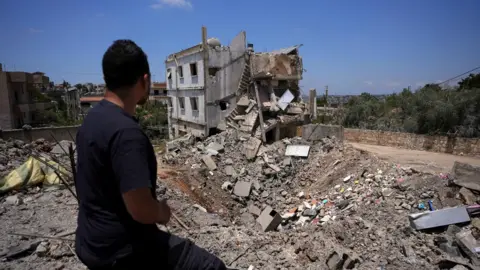
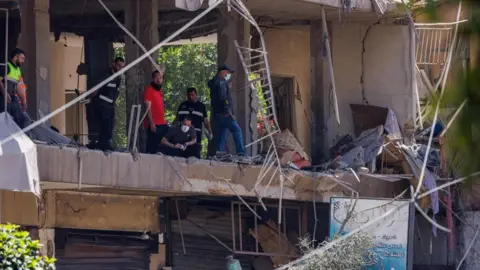
This incident marks the second accusation against Israel for targeting journalists since the escalation of the ongoing conflict, which has led to significant civilian casualties in Lebanon. Reports indicate that over 1,100 civilians, including numerous children and healthcare workers, have lost their lives amid this renewed violence. Many Lebanese citizens fear that Israel may be employing tactics reminiscent of those used in Gaza—specifically, the intentional targeting of journalists and civilians—which Israel has repeatedly denied.
Amid these tensions, fears of similar escalations loom, straining a region already grappling with humanitarian crises and the fallout from years of conflict.
The Israel Defense Forces (IDF) confirmed the strike, labeling Shoeib as a 'terrorist' associated with Hezbollah's elite Radwan Force, alleging that he had exploited his journalistic role to surveil and disclose IDF activities to the militant group. While the IDF's statement focused on Shoeib, it refrained from commenting on the deaths of Fatima and Mohamed Ftouni, adding to the complexity surrounding this incident.
In response, Lebanese President Joseph Aoun denounced the strike as a 'brazen crime' and an egregious violation of international law, emphasizing that journalists are civilians engaged in a vital professional duty. Prime Minister Nawaf Salam echoed this sentiment, calling it a blatant infringement on protections afforded to journalists in wartime.
This incident marks the second accusation against Israel for targeting journalists since the escalation of the ongoing conflict, which has led to significant civilian casualties in Lebanon. Reports indicate that over 1,100 civilians, including numerous children and healthcare workers, have lost their lives amid this renewed violence. Many Lebanese citizens fear that Israel may be employing tactics reminiscent of those used in Gaza—specifically, the intentional targeting of journalists and civilians—which Israel has repeatedly denied.
Amid these tensions, fears of similar escalations loom, straining a region already grappling with humanitarian crises and the fallout from years of conflict.