A network of Colombian mercenaries backed by the United Arab Emirates (UAE) provided critical support to Sudan's paramilitary Rapid Support Forces (RSF), enabling it to capture the western city of el-Fasher last year, a new report says. The investigation, by security analysis organization the Conflict Insights Group (CIG), used data obtained from tracking the mobile phones of the Colombian fighters. The UAE has long denied supporting the RSF, which has been fighting Sudan's regular army for three years.
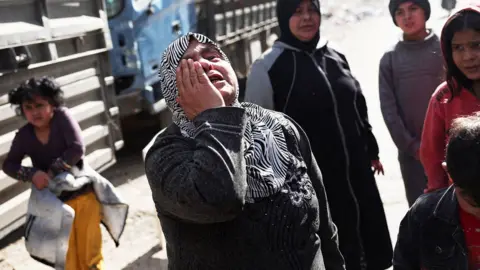
El-Fasher's fall was one of the most brutal chapters of the conflict, leading to tens of thousands killed and millions displaced. According to Justin Lynch, director of CIG, this study offers clear evidence of UAE involvement with the RSF, stating, We are making public what governments have long known - that there is a direct link between Abu Dhabi and the RSF.
The CIG tracked more than 50 mobile phones in Sudan from April 2025 to January this year with operators identified as Colombian mercenaries, using commercial tracking technology and other supporting evidence. The report documents mercenaries operating drones from a UAE military facility, providing operational support during the RSF's takeover of el-Fasher.
Colombian President Gustavo Petro has condemned the mercenaries, labeling them as spectres of death. The findings show a network involving the Desert Wolves brigade, reportedly led by a Colombian colonel based in the UAE, which facilitated the recruitment of fighters to battle for the RSF. The report concludes that without the drone operations coordinated by these mercenaries, the scale of atrocities in el-Fasher could not have reached such tragic proportions.
El-Fasher's fall was one of the most brutal chapters of the conflict, leading to tens of thousands killed and millions displaced. According to Justin Lynch, director of CIG, this study offers clear evidence of UAE involvement with the RSF, stating, We are making public what governments have long known - that there is a direct link between Abu Dhabi and the RSF.
The CIG tracked more than 50 mobile phones in Sudan from April 2025 to January this year with operators identified as Colombian mercenaries, using commercial tracking technology and other supporting evidence. The report documents mercenaries operating drones from a UAE military facility, providing operational support during the RSF's takeover of el-Fasher.
Colombian President Gustavo Petro has condemned the mercenaries, labeling them as spectres of death. The findings show a network involving the Desert Wolves brigade, reportedly led by a Colombian colonel based in the UAE, which facilitated the recruitment of fighters to battle for the RSF. The report concludes that without the drone operations coordinated by these mercenaries, the scale of atrocities in el-Fasher could not have reached such tragic proportions.