In brief
Mexican President Claudia Sheinbaum downplayed fears of a diplomatic crisis with Spain during a Barcelona summit, highlighting the importance of recognizing the rights of indigenous peoples. This statement comes amid ongoing discussions about Spain's colonial past and the recent normalization of relations following years of tension.
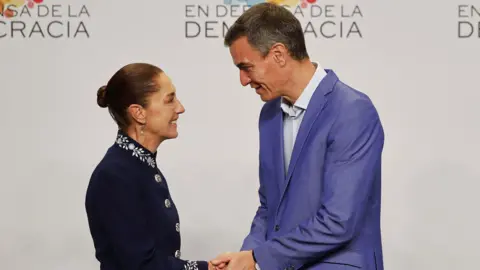
Mexican President Claudia Sheinbaum has said there was no diplomatic crisis with Spain after years of frosty relations over the conquest of the North American nation. There is no diplomatic crisis. There never has been. What is very important is that we recognise the strength of our country's indigenous peoples, she said as she arrived at a summit of left-leaning leaders in Barcelona on Saturday.Spain's colonisation of Mexico has become a thorny issue in recent years, prompting calls for an apology and an apparent diplomatic snub. The summit, which seeks to address a rise in illiberalism, comes as far-right leaders met in Italy for a rally against immigration and EU bureaucracy.Sheinbaum's comments came moments before she met the Barcelona summit's co-chair, Spanish Prime Minister Pedro Sánchez, who did not comment on the state of his nation's relations with Mexico. However, Spain's economy minister was quoted by news agency Reuters as saying that Sheinbaum's presence was a very important and positive sign of a rapprochement between the two countries.Her visit is the first by a Mexican president in eight years. Relations between Spain and Mexico deteriorated in 2019 when Sheinbaum's predecessor, Andrés Manuel López Obrador, demanded that Spain apologise for human rights violations during its conquest. Spanish conquistadors killed thousands through fighting and disease as they dismantled the Aztec empire in the 16th Century.When López Obrador's request went unanswered, Sheinbaum took the unusual decision not to invite Spain's King Felipe VI to her inauguration in 2024. Spain then refused to send any Spanish representative. Recently, though, there have been signs that relations had begun to thaw. King Felipe said in March that there had been a lot of abuse during the conquest of the territory that would become Mexico, marking a significant acknowledgment from the Spanish monarchy.The summit in Spain was the fourth meeting of the In Defence of Democracy initiative, which aims to counter extremism and illiberalism, with leaders focusing on the protection of democratic values against rising global challenges.