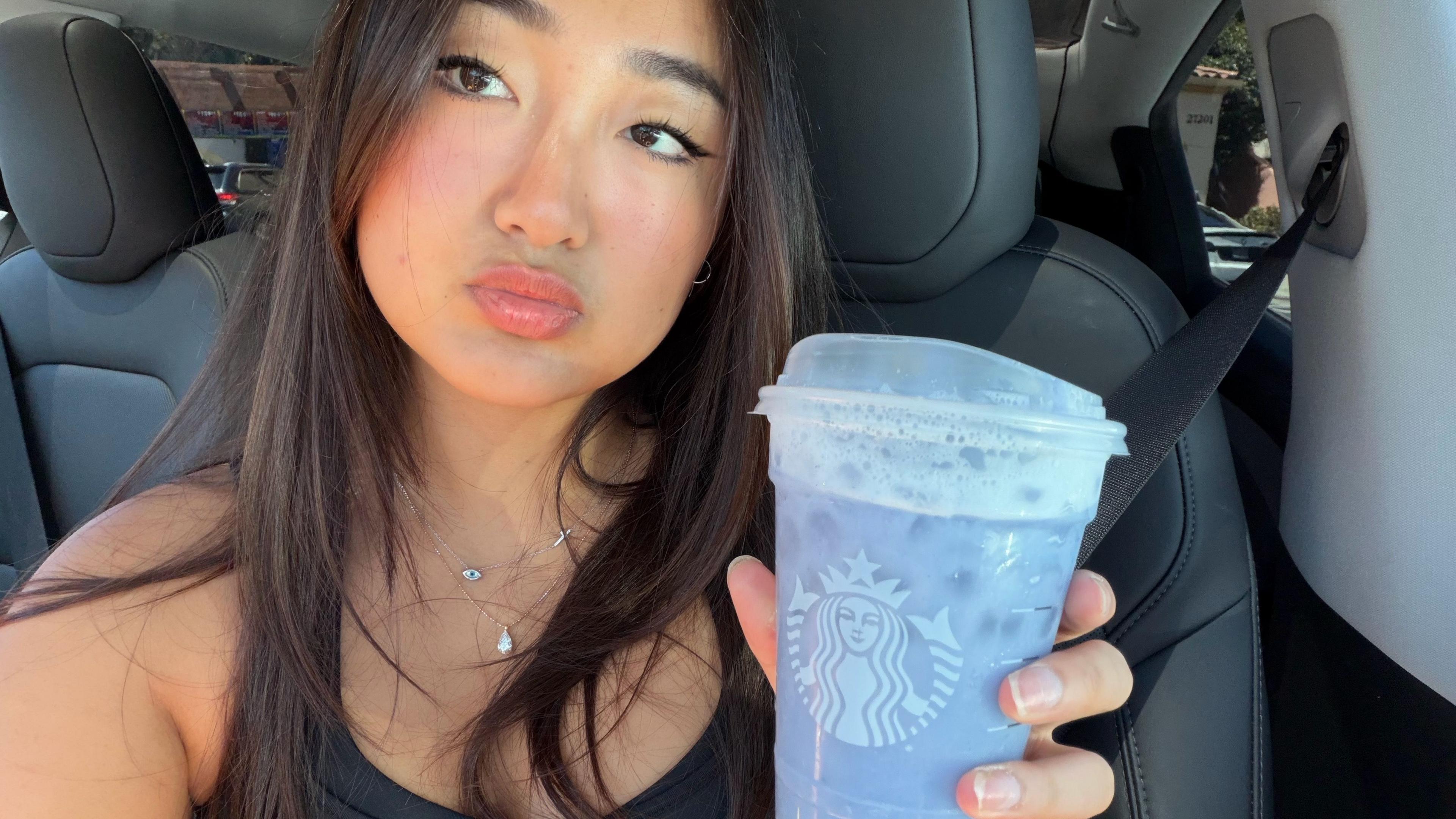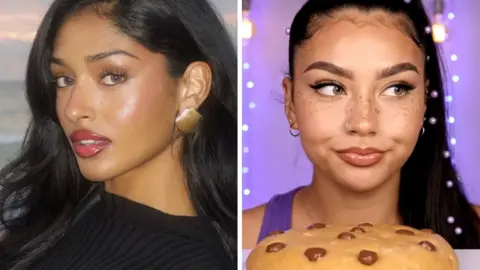
In some ways, Gigi is like any other young social media influencer. With perfect hair and makeup, she logs on and talks to her fans. She shares clips: eating, doing skin care, putting on lipstick. She even has a cute baby who appears in some videos.
But after a few seconds, something may seem a little off. She can munch on pizza made out of molten lava or apply snowflakes and cotton candy as lip gloss. Her hands sometimes pass through what she's holding.
That's because Gigi isn't real. She's the AI creation of University of Illinois student Simone Mckenzie - who needed to make some money over the summer.
Ms Mckenzie, 21, is part of a fast-growing cohort of digital creators who churn out a stream of videos by entering simple prompts into AI chatbots, like Google Veo 3. Experts say this genre, dubbed AI slop by some critics and begrudging viewers, is taking over social media feeds. And its creators are finding considerable success.
One video made me $1,600 [£1,185] in just four days, Ms Mckenzie said. I was like, okay, let me keep doing this. After two months, Gigi had millions of views, making Ms Mckenzie thousands through TikTok's creator fund.
Social media influencing only recently became a legitimate career path. But in just a few years, the industry has grown to be worth over $250bn. AI creators can produce content faster and at a lower cost, raising questions about the future of traditional influencers like Kaaviya Sambasivam, who faces significant competition.
Ms Sambasivam has invested time and resources into her content, often requiring substantial effort for each video, while AI creators can generate videos in minutes. This disparity prompts concerns about sustainability in the influencer economy.
Although some criticize AI for diluting content quality, others argue it democratizes fame, allowing individuals without extensive resources to achieve recognition.
Experts caution that as AI-generated videos become increasingly hard to distinguish from reality, they pose a potential threat. Misinformation and scams could proliferate, particularly among younger audiences lacking critical media literacy.
Nonetheless, AI videos captivate viewers, merging absurdity with creativity in ways traditional influencers can't replicate. As this technology evolves, it remains to be seen how the landscape of social media will adapt and whether human creators can maintain their relevance in an AI-driven future.