In brief
Following a ceasefire, Gaza's rescue workers grapple with immense destruction, estimating over 10,000 bodies beneath the wreckage. Amidst a desperate food aid influx and the ongoing recovery mission, the humanitarian crisis deepens with more than two million families homeless and reliant on assistance. As the region faces daunting rebuilding challenges, hope remains fragile with concerns of renewed violence looming.
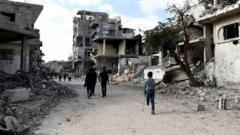
Article text: On the first full day of peace in Gaza following a lengthy conflict, rescue workers and civilians began assessing the catastrophic damage inflicted on the territory. The Civil Defence agency, responsible for emergency response, fears that over 10,000 bodies are still buried underneath the extensive ruins. Their spokesman, Mahmoud Basal, expressed hope of recovering the deceased within three months, though efforts will likely be hindered by a shortage of essential equipment such as bulldozers. Recent images from Gaza portray the utter devastation left in the wake of a 15-month Israeli military campaign, particularly in the northern parts of the enclave. The United Nations has confirmed that approximately 60% of Gaza's structures have either been damaged or destroyed throughout the conflict. While the sounds of bombardment were replaced by celebrations when the ceasefire took effect, the grim reality remains for many residents. The UN World Food Programme estimates that more than two million Gazans are now homeless, without income, and entirely dependent on food aid for survival. Following the ceasefire, humanitarian aid began flowing into Gaza, with at least 630 trucks entering the territory by the end of Sunday and 915 more reported on Monday, representing the highest number since fighting erupted.Sam Rose, the acting director of the UN’s Palestinian refugee agency, described the aid as merely the first step toward revitalizing the highly devastated region. "We’re not just talking about food, healthcare, buildings, roads, infrastructure, we’ve got individuals, families, communities that need to be rebuilt," he said, emphasizing the long road ahead for recovery amidst widespread trauma. In Israel, families of hostages released during the first exchange expressed their relief, yet sadness lingered for those still affected. Emily Damari, a dual Israeli-British citizen, was reported to be recovering well after sustaining injuries during the conflict. Israeli authorities broadcast footage of the joyful reunion between hostages and their families. The ongoing negotiations indicate that if the peace holds, an additional 30 hostages will be released over the coming weeks in exchange for around 1,800 Palestinian detainees.Palestinian health officials have estimated casualties in Gaza at over 46,900 fatalities amid the conflict, with many victims reported to be women and children. Skepticism arose, however, about these figures, as a UK-led study suggested the toll may be significantly underestimated. The Civil Defence agency indicated severe impacts on its own staff, with nearly half of its personnel either killed, injured, or detained during the conflict.Though air strike risks have decreased temporarily, recovery efforts continue, with reports of painful discoveries including the remains of infants in the rubble. Abdullah Al-Majdalawi, a Civil Defence worker, tragically conveyed the overwhelming situation: “In every street there are dead. In every neighborhood there are people under the buildings.” The urgency for action intensified as families desperately requested help to recover their loved ones from beneath the rubble.Meanwhile, displaced residents face the harsh realities of returning home amidst ongoing dangers. Many homes remain unliveable due to damage and lack of resources. Some residents expressed eagerness to survey what’s left, even as the Israeli military cautioned against approaching operational zones. As Gaza's residents cling to hope amid a climate of uncertainty, concerns voiced by Secretary-General Antonio Guterres about potential renewed violence highlight the fragility of the ceasefire.