In brief
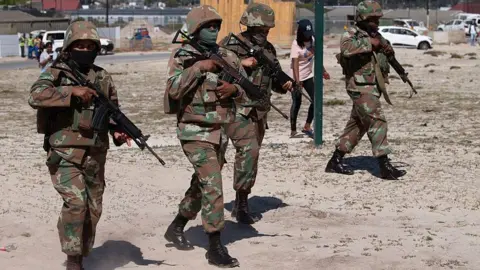
The South African Army has been dispatched to several crime-stricken areas in an initiative announced by President Cyril Ramaphosa, aiming to restore order. The deployment comes amidst a backdrop of high murder rates and widespread gang violence, with mixed reactions from local residents regarding its effectiveness.
South Africa's army has officially been deployed to several parts of the country to help overwhelmed police clamp down on violent crimes, including illicit mining and gangs. President Cyril Ramaphosa earlier this year announced the deployment of 2,200 soldiers to five of the country's nine provinces hardest hit by criminal activities. Authorities say the deployment, set to run for a year, is aimed at restoring order to crime-ridden areas, but critics warn that using the military in civilian policing rarely delivers lasting results. Illicit mining and gang violence are major problems in South Africa, which has one of the world's highest murder rates. According to the latest crime statistics, covering the period between October and December 2025, around 71 people were killed each day.An initial group of soldiers was deployed to several parts of Gauteng province, which includes Johannesburg, in March. The second, and main cohort, will help with operations in the Eastern Cape, Free State, North West and Western Cape provinces starting from April 1 for a year. The BBC spoke to several residents in a Johannesburg suburb, Eldorado Park, a few weeks after soldiers arrived in the area. It is one of the three Johannesburg suburbs targeted in the initial military deployment due to the high levels of gang violence there.Some residents expressed scepticism about the soldiers' effectiveness. Eldorado Park feels like a hell-hole to live in, stated 74-year-old Leola Davies. Meanwhile, mother of three Elviena le Roux voiced concerns that military presence may only escalate violence rather than alleviate it. Criminologist Guy Lamb expressed doubts about the deployment's potential for lasting results, emphasizing that soldiers are not trained for community-based policing required to build trust. The backdrop of the apartheid regime's military use continues to influence public perceptions of military deployment in civilian contexts.This is not the first time Ramaphosa has called for military aid in combating crime; previous deployments occurred during riots following former President Jacob Zuma's arrest and in efforts against illegal mining. Despite optimism from authorities about making an impact, experts warn without addressing the root causes of crime, escalation is likely once soldiers withdraw.