In brief
Sierra Leone’s traditional shoreline fishing community finds its nets smaller and its catches thinner as Chinese trawlers swell the waters around Sherbo Island. Fishermen say the foreign vessels ignore a seven‑mile exclusion zone, illegally fishing, cutting nets at night and causing an estimated $250 loss per replacement. An international report attributes roughly 40% of the world’s unlicensed catch to West African waters, costing the region $10 bn in lost revenue. Government officials deny systematic wrongdoing, citing transponder checks, while civil‑society groups demand stronger oversight and accountability.
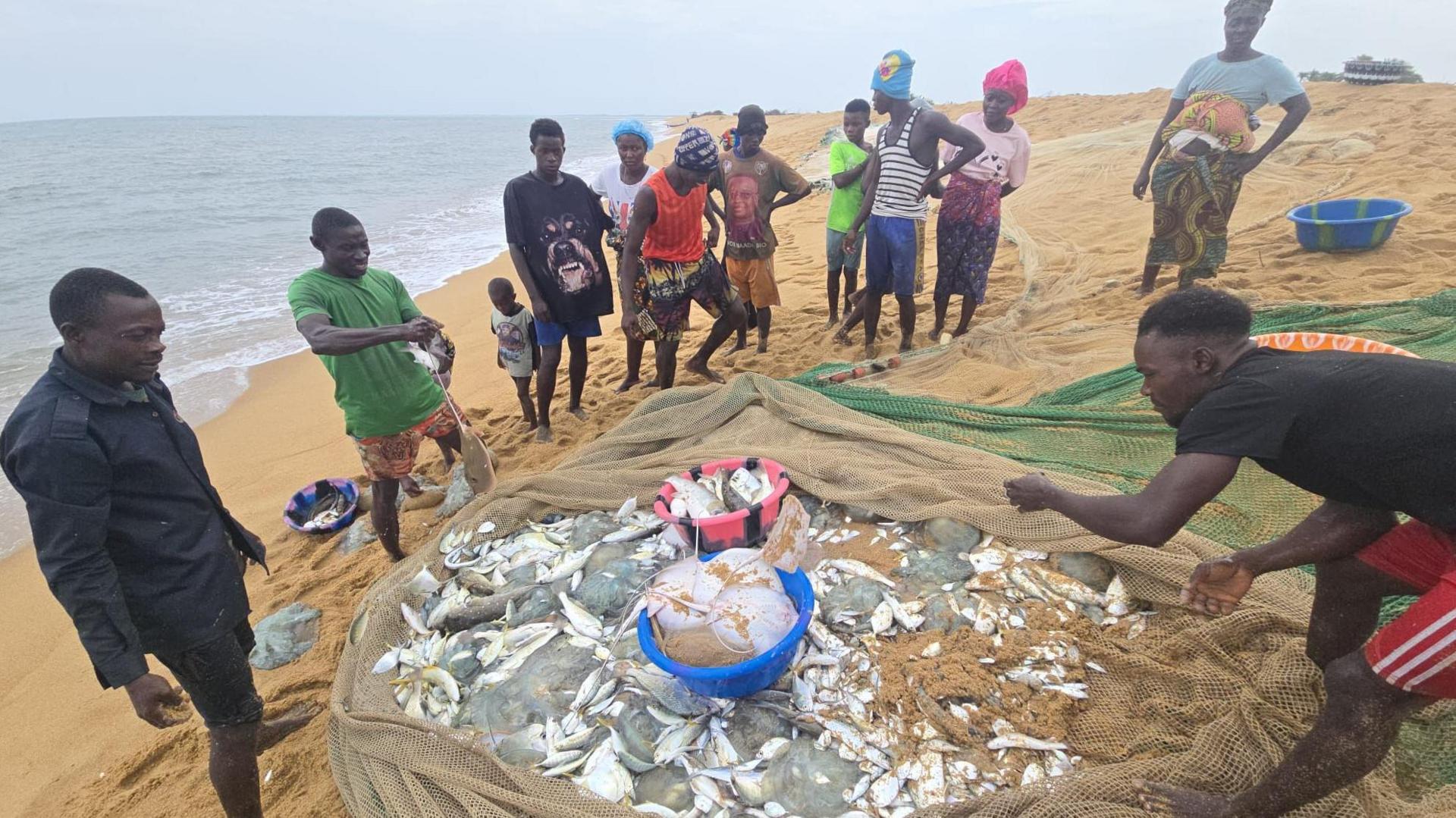
The sound of voices shouting across the sandy shore of Sherbo Island, Sierra Leone, is drowned by the swell of a massive net thick with blue‑eyed snapper, mackerel, barracuda, and other fished species.
Local fishermen, however, have been pulling the same nets into the harbor for less than half the weight it used to produce when one looks at the beach this year. The decrease is not due to changing fish habits or climate, the shrimping community says; it is an outcome of a growing number of foreign trawling vessels that have entered the waters beyond the official seven‑mile exclusion zone.
Marie Pierre, a fisherwoman who works with sardines, recounts scratching out the jellyfish that litter the shore and notes how she suspects illegally‑fished trawlers are sweeping the ocean floor: “They don’t care about our lines, they come and cut the nets, or haul fish and leave a waste.”
Musa Gassimo tells that the nets have been lopped off at night by large foreign vessels, costing local crews approximately $250 (about £189) for each replacement. He sees these ships as not just a resource drain but an unbearable daily threat.
The problem sits within a larger context: an annual report released by the Financial Transparency Council found that about 40% of the world’s unlicensed catch originates from West African waters—$10 bn a year in lost revenue—and it is “not improving” over the past two years.
Thomas Turay, the president of Sierra Leone’s Fishermen’s Union, points to a steep fall in average catch:
"The sea belongs to us. We see the foreign trawlers violating the exclusion zone and cutting nets at night. None of our complaints are taken seriously.” He blames corruption, arguing that any corporate presence can be bribed to ignore the rules.
Concurrently, the ministry of Fisheries claims that all international vessels are now required to carry transponders, and that inspectors routinely check compliance. Sheku Sei says the government has introduced “strong deterrent” penalties, though only few, if any, have been applied in the past decade.
The Chinese chamber of commerce and the Chinese Ministry of Foreign Affairs have both publicly refuted accusations of unlawful fishing, stressing compliance with international law. Yet civil‑society groups emphasize that the real test lies in a robust, global monitoring system that could translate the pizza‑hole effect into policy change.
In the meantime, the fishing boats of Sierra Leone remain dwarfed by the towering trawlers that dominate the waves—a stark reminder of the continuing clash between local livelihoods and global commercial ambitions.