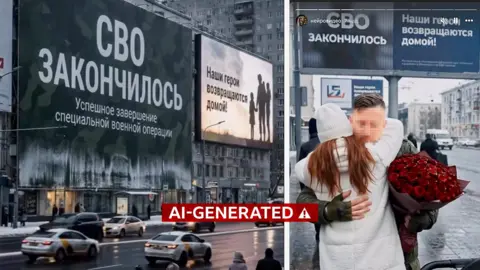
A surge of Russian families are using generative AI to create videos that appear to resurrect children and spouses who were killed in the war with Ukraine. In a recent Instagram post by a popular blogger known as Katya Jin, a fifteen‑second clip shows a woman with a stroller embracing a man in uniform, a scene that many speculated was modelled on the blogger’s own family.
The videos, generated by advanced deep‑learning tools, typically portray the deceased soldiers as heroic defenders or celestial angels, omitting the brutal reality of the conflict. While the portrayals bring momentary emotion for some families, Ukrainian viewers have responded with outrage, describing the content as a grotesque misuse of the war.
Relief organisations and researchers warn that such AI‑generated imagery can complicate the grieving process by creating an illusion of life that can slow acceptance of loss. Katarzyna Nowaczyk‑Basińska of the Leverhulme Centre for the Future of Intelligence notes that these posts are part of a larger global “digital after‑life” market, already used in museums, courtrooms and political campaigns.
In Russia, where generative‑AI services are often blocked, individuals like Katya Jin and Anna Korableva provide a commercial route. Charges range from a few roubles to thousands for high‑quality videos; one creator reports monthly earnings that double the average Russian wage.
The practice raises serious ethical questions. Some clients say the videos “do little to ease pain”, while others still display AI imagery in personal spaces, claiming it offers a fragile sense of connection. The conversation underscores how technology intersects with grief, memory and national propaganda in a wartime context.