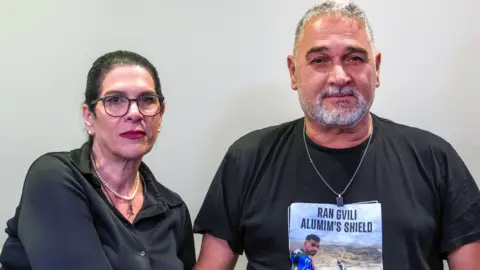
The parents of the last dead hostage in Gaza have spoken to the BBC about their desperate wait for his body to be returned.
Itzik and Talik Gvili insisted the Gaza peace deal could not progress until Hamas handed over the remains of their son Ran, a 24-year-old Israeli police officer also known as Rani.
We really hope that all people in the world... want to end this situation and go to the second phase, so Hamas must bring Rani home, his mother Talik said, after Israel confirmed the body of Thai national Suthisak Rintalak had been returned on Wednesday.
He and Ran were among 251 people taken hostage in the Hamas-led attack on Israel on 7 October 2023, when another 1,200 people were killed.
Ran was killed while fighting Hamas gunmen in Kibbutz Alumim, and his body was subsequently taken to Gaza as a hostage, according to the Israel Defense Forces (IDF).
His parents said he was on medical leave with a broken shoulder at the time of the attacks but went to fight after seeing on television what was happening.
He couldn't stay at home even though he was injured. He took my car and his uniform... and went to help in the fight against the terrorists, said his father Itzik.
While the couple have been told by Israeli officials that Ran was killed, they say they are still holding onto a little percent of hope that maybe he's alive, maybe he's survived. We want closure, said Talik.
Speaking during a visit to London, Ran's parents described their pain over the past 26 months, much of which they have spent campaigning for the return of all the living and dead hostages.
They expressed gratitude for the growing support within Israel, where they feel joined by the families of other hostages in their quest for justice. After the return of Ran's body, they hope for lasting peace and to see Hamas dismantled.
Earlier, Israeli Prime Minister Benjamin Netanyahu described Ran as a hero of Israel, stating, We are determined to bring Ran back for a proper Jewish burial and will spare no effort to do so. The emotional plea from the Gvili family highlights the continued impact of the ongoing conflict on individual lives and the broader need for resolution in the region.