In brief
The Rafah border crossing has reopened for limited movement after being largely closed since May 2024. Only a handful of patients have been allowed to cross into Egypt, raising concerns as thousands await treatment. The reopening follows the recent return of the last Israeli hostage's body, which was a precondition imposed by Israel. Local officials express cautious optimism while calling for the easing of restrictions to facilitate humanitarian aid.
Only a few sick and wounded Palestinians from Gaza arrived in Egypt on Monday after the Rafah border crossing reopened for the movement of people. The crossing has largely been closed since the Gazan side was captured by Israeli forces in May 2024.
The reopening was supposed to coincide with the first phase of US President Trump's ceasefire plan between Israel and Hamas, which begun in October, but was delayed until the return of the body of the last Israeli hostage, which occurred last week.
This development offers relief to many Palestinians who see it as a lifeline to the outside world, though frustration remains as only limited numbers are allowed to cross and no goods will be permitted.
Local hospitals and the World Health Organization report that around 20,000 sick and wounded Palestinians are waiting to leave Gaza. Israeli authorities indicated that only 50 patients, along with one or two relatives, would be allowed to exit each day, while 50 who had previously left would be allowed to return.
On the first day of the reopening, only five patients accompanied by their relatives were allowed to cross, with others facing delays due to security checks. Palestinian officials attribute these delays to Israeli security protocols, which have drawn no immediate comment from Israel's military.
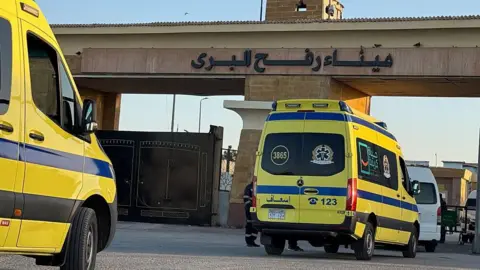
The crossing is now operated by European Union supervisors and local Palestinian staff, with stringent security checks conducted by Israel remotely. A significant amount of ambulances and hospitals in Egypt are prepared to receive evacuated patients.
Palestinian individuals hoping to leave for medical treatment, such as Sabrine al-Da'ma, who wishes to donate a kidney to her daughter suffering from disease, express anxious hopes for expedited referrals. Others like student Maha Ali lament lost educational opportunities due to restrictions at the crossing.
This initial reopening is regarded by Palestinian officials and EU representatives as a "positive step" but underscores the ongoing challenges and conditional nature of humanitarian access in the region.