Two Gazan women who passed through the newly reopened Rafah crossing with Egypt on Monday have reported that a local Palestinian militia, the Abu Shabab, conducted checks at an Israeli military checkpoint within the Gaza Strip.
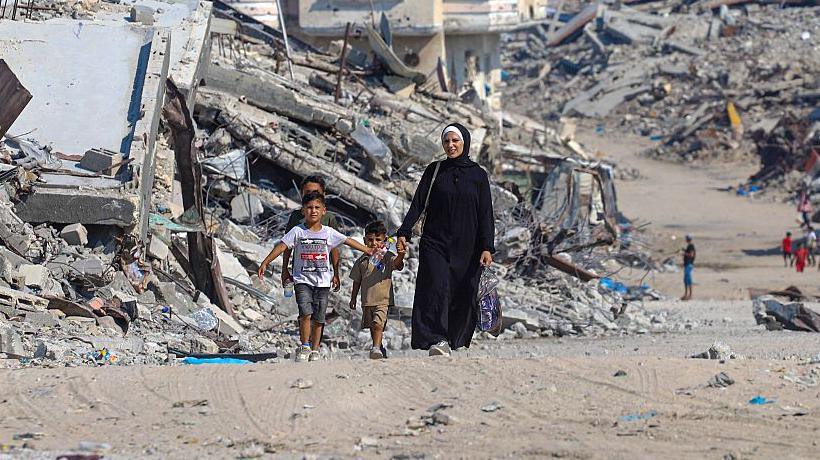
Lamia Rabia, traveling with her children, described being escorted by Israeli forces from the border to a checkpoint where Abu Shabab members searched them and their belongings.
There was a woman from the Abu Shabab group who conducted the searches on the women, she explained. They didn't speak with us, they only searched us and then we went to the Israelis, who questioned us.
The women recounted that both Israeli forces and the militia were present together during these inspections, raising questions about the coordination between the two entities. The Israel Defense Forces (IDF) declined to comment on these claims.
The Abu Shabab militia, known for its opposition to Hamas, operates under Israeli military supervision in Rafah and is reportedly armed and supported by Israel. Ghassan al-Dheini, the militia leader, noted their significant role in security regarding passage through the Rafah crossing.
One of the women, whose identity is withheld for safety reasons, alleged that she was mistreated by the militia, facing physical abuse and threats concerning her travel plans.
While official protocols had initially allowed for 50 patients and relatives to return to Gaza after medical treatment in Egypt, only 12 managed to cross on that Monday due to ongoing security checks. The European Union is considering further oversight of future crossings amid reports of mistreatment.
The Rafah crossing's reopening marks a crucial development in the ongoing challenges faced by Gazans needing medical care abroad, yet it also underscores the complex realities of local control, authority, and the evolving interplay of militia and military oversight in the region.
Lamia Rabia, traveling with her children, described being escorted by Israeli forces from the border to a checkpoint where Abu Shabab members searched them and their belongings.
There was a woman from the Abu Shabab group who conducted the searches on the women, she explained. They didn't speak with us, they only searched us and then we went to the Israelis, who questioned us.
The women recounted that both Israeli forces and the militia were present together during these inspections, raising questions about the coordination between the two entities. The Israel Defense Forces (IDF) declined to comment on these claims.
The Abu Shabab militia, known for its opposition to Hamas, operates under Israeli military supervision in Rafah and is reportedly armed and supported by Israel. Ghassan al-Dheini, the militia leader, noted their significant role in security regarding passage through the Rafah crossing.
One of the women, whose identity is withheld for safety reasons, alleged that she was mistreated by the militia, facing physical abuse and threats concerning her travel plans.
While official protocols had initially allowed for 50 patients and relatives to return to Gaza after medical treatment in Egypt, only 12 managed to cross on that Monday due to ongoing security checks. The European Union is considering further oversight of future crossings amid reports of mistreatment.
The Rafah crossing's reopening marks a crucial development in the ongoing challenges faced by Gazans needing medical care abroad, yet it also underscores the complex realities of local control, authority, and the evolving interplay of militia and military oversight in the region.