It's not yet a full year since European leaders buckled up for President Trump's second term, and now this rollercoaster ride feels it has reached its most dangerous turn yet.
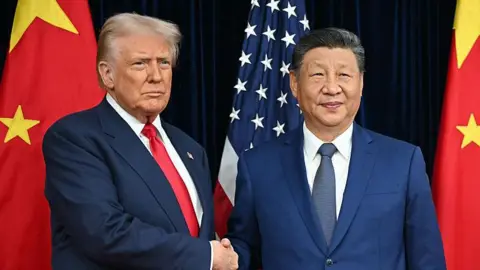
The occupant on the White House is dangling the threat of economic punishment over the heads of countries that are supporting the territorial integrity of an EU member, Denmark. Leaders will hold an emergency EU summit about this in the coming days. If the European Union fights back with similar countermeasures, then it risks a full-blown trade war with the US.
If it doesn't take action, will Trump conclude the bloc of 27 is weak, divided, and too scared to stop him carrying out his threat of obtaining Greenland – either by buying or taking it with military force?
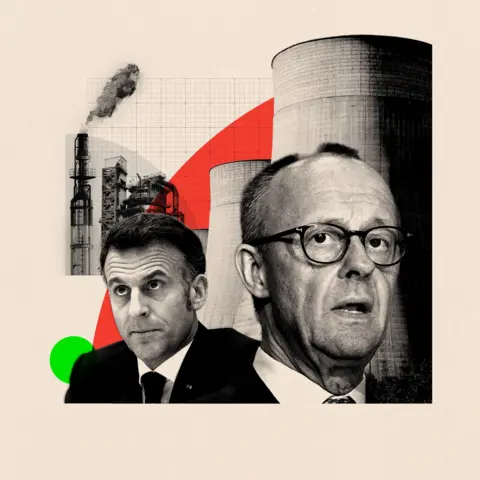
French President Emmanuel Macron says it's time to use the EU's trade bazooka for the first time. This is the Anti-Coercion Instrument (ACI), which would allow Europe to hit back with counter-tariffs, restrict access to the Single Market, and block applications for lucrative EU contracts. Ironically, this weapon was originally designed to combat any bullying interference from a hostile external power, initially aimed at countries like China, not the US.
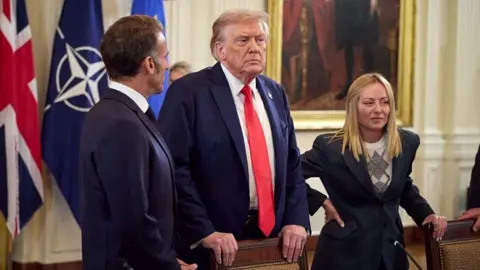
Some EU leaders are weary of the Macron approach. Among them is Italy's Giorgia Meloni, who has enjoyed rapport with Trump. She has spoken of a problem of understanding and communication over recently sent troops to Greenland by some European countries, including Denmark, without expanding on what may have been misunderstood.
Meloni's explanation opens the door to a more diplomatic approach to tackling this precarious EU-US crisis. Sunday's discreet emergency meeting in Brussels of EU ambassadors contrasts sharply with routine summits where leaders engage publicly.
It's unclear who will make the next move, and whether Trump will defuse his latest threat or double down. With EU action on such a sensitive issue likely to be slow and divided, the Transatlantic relationship hangs in a precarious balance.
The occupant on the White House is dangling the threat of economic punishment over the heads of countries that are supporting the territorial integrity of an EU member, Denmark. Leaders will hold an emergency EU summit about this in the coming days. If the European Union fights back with similar countermeasures, then it risks a full-blown trade war with the US.
If it doesn't take action, will Trump conclude the bloc of 27 is weak, divided, and too scared to stop him carrying out his threat of obtaining Greenland – either by buying or taking it with military force?
French President Emmanuel Macron says it's time to use the EU's trade bazooka for the first time. This is the Anti-Coercion Instrument (ACI), which would allow Europe to hit back with counter-tariffs, restrict access to the Single Market, and block applications for lucrative EU contracts. Ironically, this weapon was originally designed to combat any bullying interference from a hostile external power, initially aimed at countries like China, not the US.
Some EU leaders are weary of the Macron approach. Among them is Italy's Giorgia Meloni, who has enjoyed rapport with Trump. She has spoken of a problem of understanding and communication over recently sent troops to Greenland by some European countries, including Denmark, without expanding on what may have been misunderstood.
Meloni's explanation opens the door to a more diplomatic approach to tackling this precarious EU-US crisis. Sunday's discreet emergency meeting in Brussels of EU ambassadors contrasts sharply with routine summits where leaders engage publicly.
It's unclear who will make the next move, and whether Trump will defuse his latest threat or double down. With EU action on such a sensitive issue likely to be slow and divided, the Transatlantic relationship hangs in a precarious balance.