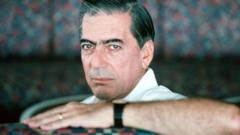
Mario Vargas Llosa, a revered and polarizing figure in Latin American literature, has passed away at the age of 89 in his home country of Peru. Known for his profound and often controversial contributions, Vargas Llosa is celebrated for over 50 works, earning the Nobel Prize for Literature in 2010. Judges recognized him as a "divinely gifted story-teller," which encapsulates his rich narratives that addressed themes of authoritarianism, violence, and machismo, cementing his role in the Latin American Boom of the 1960s.
Born in 1936 to a middle-class family in Arequipa, Peru, Vargas Llosa's tumultuous childhood, following his parents' separation, shaped his future literary career. After experiencing a traumatic two years at the Leoncio Prado Military Academy, he published his first novel, The Time of the Hero, in 1962. This seminal work critiqued corruption within military institutions and faced backlash, including accusations of possessing a "degenerate mind."
His subsequent novel, The Green House, set in the Peruvian desert and jungle, depicted a web of pimps, missionaries, and soldiers, further establishing his voice in Latin America's literary renaissance. This movement highlighted the region's socio-political turmoil and provided a platform for revolutionary ideas within literature.
Vargas Llosa’s literary conflicts erupted into personal rivalries as well; most notably with fellow Nobel laureate Gabriel García Márquez after a notorious altercation in 1976. Despite their long-standing feud, their relationship eventually mended, culminating in Vargas Llosa's Nobel recognition, a decade after García Márquez's win.
His works continued to reveal the complexities of life under political instability in Latin America, exemplified through novels like Conversations in the Cathedral, which illustrated the impact of dictatorship on the individual. The author's political journey was marked by initial support for leftist ideologies, which shifted dramatically, leading to his candidacy for the presidency of Peru with a centre-right party in 1990.
Vargas Llosa remained an alert social commentator, including his involvement in the investigation of the Uchuraccay massacre. Although controversial, his works often focused on the abuses of state power, exemplified in The Feast of the Goat, exploring the dictatorship of Rafael Trujillo in the Dominican Republic.
Despite his literary success, Vargas Llosa's public persona became contentious with ripples of criticism for his comments on journalism and feminism in later years. He passed away in Lima, surrounded by family, leaving behind a complicated legacy marked by literary brilliance and societal critique. His passing signifies the end of an era for the champions of the Latin American Boom.
Born in 1936 to a middle-class family in Arequipa, Peru, Vargas Llosa's tumultuous childhood, following his parents' separation, shaped his future literary career. After experiencing a traumatic two years at the Leoncio Prado Military Academy, he published his first novel, The Time of the Hero, in 1962. This seminal work critiqued corruption within military institutions and faced backlash, including accusations of possessing a "degenerate mind."
His subsequent novel, The Green House, set in the Peruvian desert and jungle, depicted a web of pimps, missionaries, and soldiers, further establishing his voice in Latin America's literary renaissance. This movement highlighted the region's socio-political turmoil and provided a platform for revolutionary ideas within literature.
Vargas Llosa’s literary conflicts erupted into personal rivalries as well; most notably with fellow Nobel laureate Gabriel García Márquez after a notorious altercation in 1976. Despite their long-standing feud, their relationship eventually mended, culminating in Vargas Llosa's Nobel recognition, a decade after García Márquez's win.
His works continued to reveal the complexities of life under political instability in Latin America, exemplified through novels like Conversations in the Cathedral, which illustrated the impact of dictatorship on the individual. The author's political journey was marked by initial support for leftist ideologies, which shifted dramatically, leading to his candidacy for the presidency of Peru with a centre-right party in 1990.
Vargas Llosa remained an alert social commentator, including his involvement in the investigation of the Uchuraccay massacre. Although controversial, his works often focused on the abuses of state power, exemplified in The Feast of the Goat, exploring the dictatorship of Rafael Trujillo in the Dominican Republic.
Despite his literary success, Vargas Llosa's public persona became contentious with ripples of criticism for his comments on journalism and feminism in later years. He passed away in Lima, surrounded by family, leaving behind a complicated legacy marked by literary brilliance and societal critique. His passing signifies the end of an era for the champions of the Latin American Boom.