In brief
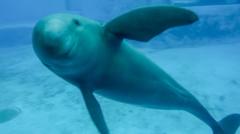
In a race against extinction, scientists at Wuhan's Institute of Hydrobiology are committed to protecting the finless porpoise, a species that has dwindled drastically in the Yangtze River. With only about 1,200 of these marine mammals remaining, researchers are utilizing a multi-faceted approach which includes enforcing a complete ban on fishing and monitoring water quality. A critical component to their success involves not only limiting fishing activities – which has rendered over 220,000 fishermen jobless – but also involving local communities in conservation efforts.
With the baiji river dolphin and paddle fish now extinct, the finless porpoise remains as a vital predator that reflects the river’s ecosystem. Researchers hope that the successful fishing ban, which has shown promising increases in fish populations since its start in 2021, will continue beyond its initial 10-year term. Captive breeding and community wildlife tracking have also gained traction, showcasing the interconnectedness of local economies and wildlife health.Despite hopes for recovery, challenges persist, including underwater noise pollution from shipping traffic and industrial runoff. Nonetheless, the collaborative actions to regulate chemical factories along the river and the gradual rise in porpoise numbers signal a hopeful trajectory for both the species and the wider Yangtze River ecosystem.