In brief
Noland Arbaugh, who became the first recipient of Neuralink's brain chip after being paralysed for eight years, now controls a computer using only his thoughts, igniting discussions about the tech's potential and privacy implications.
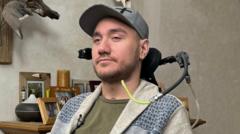
In a remarkable leap into the future, Noland Arbaugh, 30, has become the first individual to receive a mind-reading chip from Neuralink, a neurotechnology company founded by Elon Musk. This event marks a pivotal moment in brain-computer interface (BCI) technology, which aims to bridge the gap between human thought and digital interaction. Following a tragic diving accident in 2016 that left him paralysed below the shoulders, Noland’s journey with the implant commenced in January 2024 and came with an open acknowledgement of its inherent risks.For Noland, the focus is not on the celebrity founder but the technology itself. "If everything worked out, then I could help being a participant of Neuralink," he remarked, embodying a pioneering spirit that is central to his experience. The chip detects electrical impulses from the brain and translates them into computer commands, allowing Noland to regain a degree of independence he had lost.The chip's ability to control a computer merely by thinking has brought Noland immense joy, enabling him to play games once again—a pastime he thought he had lost forever. "I'm beating my friends at games, which really shouldn't be possible," he shared gleefully, highlighting the chip’s potential to offer life-altering benefits.However, the technology also raises significant concerns, particularly regarding privacy and data security. Neuroscience experts warn that mind-reading devices could compromise personal privacy by exposing thoughts and beliefs. Anil Seth, Professor of Neuroscience, warns, "Once you've got access to stuff inside your head, there really is no other barrier to personal privacy left."Even with these uncertainties, Noland is enthusiastic about the future applications of the chip, hoping that it might one day allow him to control a wheelchair or even a humanoid robot. Nonetheless, his participation in Neuralink's study is set for six years, leaving his long-term future uncertain.Noland's experience exemplifies a groundbreaking development in BCI technology, encouraging further exploration into the brain's capabilities. As other firms like Synchron are also advancing similar technologies with less invasive methods, the race to harness brain power continues. Despite the challenges and ethical concerns, Noland Arbaugh's story serves as a powerful reminder of technology's potential to change lives—even as the conversation around its implications deepens.