In brief
The Iranian regime displays significant resilience amidst ongoing military conflict with the U.S. and Israel, contradicting claims of a regime change post the assassination of Supreme Leader Khamenei. While Trump declares military victories, the unchanged structure of Iran's leadership suggests a continued endurance strategy. This situation poses complex challenges for U.S. policymakers grappling with whether to disengage or escalate military engagement.
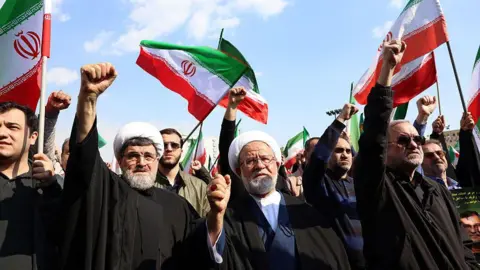
In the midst of the U.S.-Iran conflict, Iran's government stands firm, defying predictions of imminent regime change following the assassination of Supreme Leader Ayatollah Ali Khamenei. While President Trump declared the destruction of Iran's military capabilities during a recent address, threats of escalation reveal a deeper contradiction in U.S. strategy. Despite continuous attacks, the Iranian regime's structure remains unshaken, with key leaders still in power and new commanders emerging from the same ideological ranks.Tehran's long-standing strategy is centered on survival against militarily superior adversaries, with 'still standing' regarded as a successful outcome. This notion of endurance remains central as Iran retains control over vital energy routes such as the Strait of Hormuz, allowing it to exert considerable influence even under external pressures. This persistent resilience creates a dilemma for Washington: a disengagement could validate Iran's belief in the efficacy of endurance, while continued military engagement risks further entanglement in a conflict lacking a clear resolution. As the war progresses, Tehran's resolve appears steadfast, reflecting a core belief that survival is the pathway to ultimate success.