In brief
Recent court filings have publicly exposed the tangled narrative behind Nigeria's alleged coup plot aimed at President Bola Tinubu. With the indictment of six accused individuals, including a prominent Islamic cleric, insights into the financial and strategic framework of the coup are being uncovered. Central figures include Colonel Mohammed Ma'aji as the mastermind and former oil minister Timipre Sylva as a potential financier. While the defendants deny charges of treason and terrorism, the implications point to broader issues of instability in Nigeria amidst escalating political unrest.
For months, rumors and secrecy have surrounded last year's alleged Independence Day coup plot in Nigeria - but with this week's indictment of six people accused of involvement comes the first details of what is said to have been an elaborate plan to oust President Bola Tinubu.
It was due to take place on 1 October 2025 - the day Nigeria marked the 65th anniversary of its independence from the UK. However, the celebratory parade, attended by the president, was suddenly cancelled at the last minute, leaving many to speculate why.
In January, the military announced that 16 unnamed senior military officers would face a court-martial over an alleged plot, effectively acknowledging that a coup attempt had been thwarted. Now, court documents filed at the Federal High Court in Abuja have unveiled the name of the alleged mastermind, hinting that one of the main aims of the plotters was to destabilize the state ahead of the takeover.
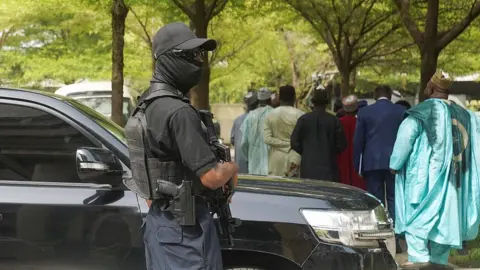
The alleged ringleaders now face trial, where they have denied the 13 charges, which include treason and terrorism. Their prosecution could shed light on a conspiratorial plan believed to have involved elements of Nigeria's security forces.
Colonel Mohammed Ma'aji is identified as the alleged chief strategist of the coup attempt. A relatively obscure figure, he rose through military ranks during a time of escalating oil-related violence in the Niger Delta.
The court documents also highlight Timipre Sylva, the former oil minister, as a potential financier of the coup. Though he has not been formally indicted, his name appears frequently in the charges, stating he remains 'at large'. The military believes Sylva played a key role in providing financial backing for the plotters.
In a surprising twist, Sani Abdulkadir, a popular Islamic cleric, has been implicated in the plot. Abdulkadir's involvement suggests a blend of religious aspects into the coup's strategic planning, as he was reportedly acting as a 'spiritual warrior' for the conspirators.
Amidst these allegations arises the question of whether further arrests will follow. An in-depth investigation previously listed 40 suspects, hinting at a broader conspiracy potentially reaching into high ranks of military and civilian sectors.
The implications of this scandal could reflect a concerning trend, as Nigeria observes a wave of military takeovers in surrounding West African nations while bracing under a civilian government since 1999. Citizens remain anxious about both the unfolding trial and the potential return of military rule.