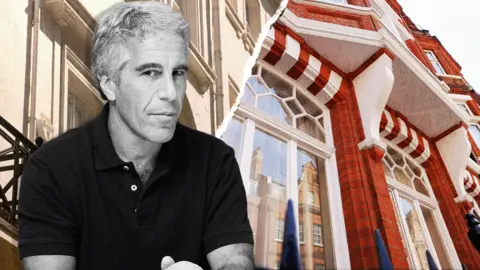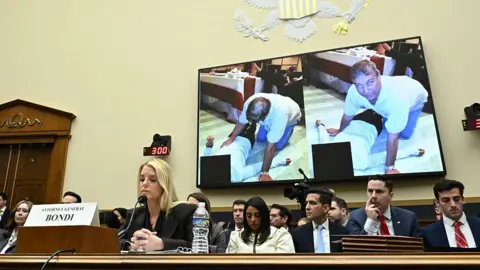
During a high-stakes congressional hearing, U.S. Attorney General Pam Bondi faced serious scrutiny regarding how the Justice Department has handled the release of documents related to the late Jeffrey Epstein. The hearing, which turned combative at times, saw Bondi defending her department amidst a barrage of questions about the redaction of victims’ names and the delivery of sensitive information.
Bondi opened her testimony invoking Epstein's notorious legacy, labeling him a 'monster' and expressed her apologies to the victims present. However, as lawmakers, including Democratic Representative Pramila Jayapal, raised questions about the handling of these files, the atmosphere quickly escalated. Jayapal highlighted allegations that nude images of survivors were released, leading her to query Bondi about accountability and responses to affected victims, all of whom indicated they had not met with the Justice Department.
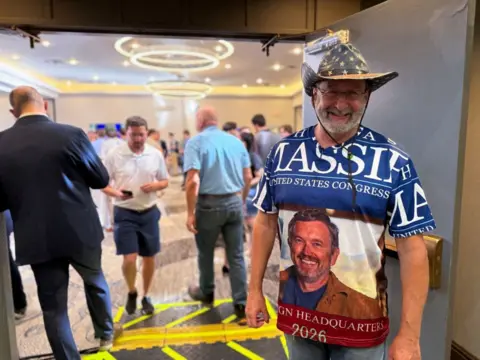
The tension was palpable when Bondi lashed out at specific lawmakers, branding one a 'washed-up loser', while others stormed out in frustration over the exchanges. The charges came not just from Democrats but Republicans like Thomas Massie, who demanded accountability for the revelation of unredacted names that were supposed to remain protected, emphasizing the issue transcends mere political squabbles and affects multiple administrations.
A significant focus was drawn to allegations involving Andrew Mountbatten-Windsor, with Representative Ted Lieu presenting photos from Epstein's files purportedly showing him in questionable circumstances. The discourse further complicated as Bondi shifted questions back to past officials, arguing the responsibility for the current state lay with previous administrations.
Additionally, Bondi had to address other pressing issues, including the fatal shootings by federal agents in Minnesota, which drew extreme concern from lawmakers who labeled them 'executions'. Amidst these serious topics, Bondi received some support from Republicans on the committee, highlighting the contentious political landscape surrounding these investigations.}
Bondi opened her testimony invoking Epstein's notorious legacy, labeling him a 'monster' and expressed her apologies to the victims present. However, as lawmakers, including Democratic Representative Pramila Jayapal, raised questions about the handling of these files, the atmosphere quickly escalated. Jayapal highlighted allegations that nude images of survivors were released, leading her to query Bondi about accountability and responses to affected victims, all of whom indicated they had not met with the Justice Department.
The tension was palpable when Bondi lashed out at specific lawmakers, branding one a 'washed-up loser', while others stormed out in frustration over the exchanges. The charges came not just from Democrats but Republicans like Thomas Massie, who demanded accountability for the revelation of unredacted names that were supposed to remain protected, emphasizing the issue transcends mere political squabbles and affects multiple administrations.
A significant focus was drawn to allegations involving Andrew Mountbatten-Windsor, with Representative Ted Lieu presenting photos from Epstein's files purportedly showing him in questionable circumstances. The discourse further complicated as Bondi shifted questions back to past officials, arguing the responsibility for the current state lay with previous administrations.
Additionally, Bondi had to address other pressing issues, including the fatal shootings by federal agents in Minnesota, which drew extreme concern from lawmakers who labeled them 'executions'. Amidst these serious topics, Bondi received some support from Republicans on the committee, highlighting the contentious political landscape surrounding these investigations.}