In brief
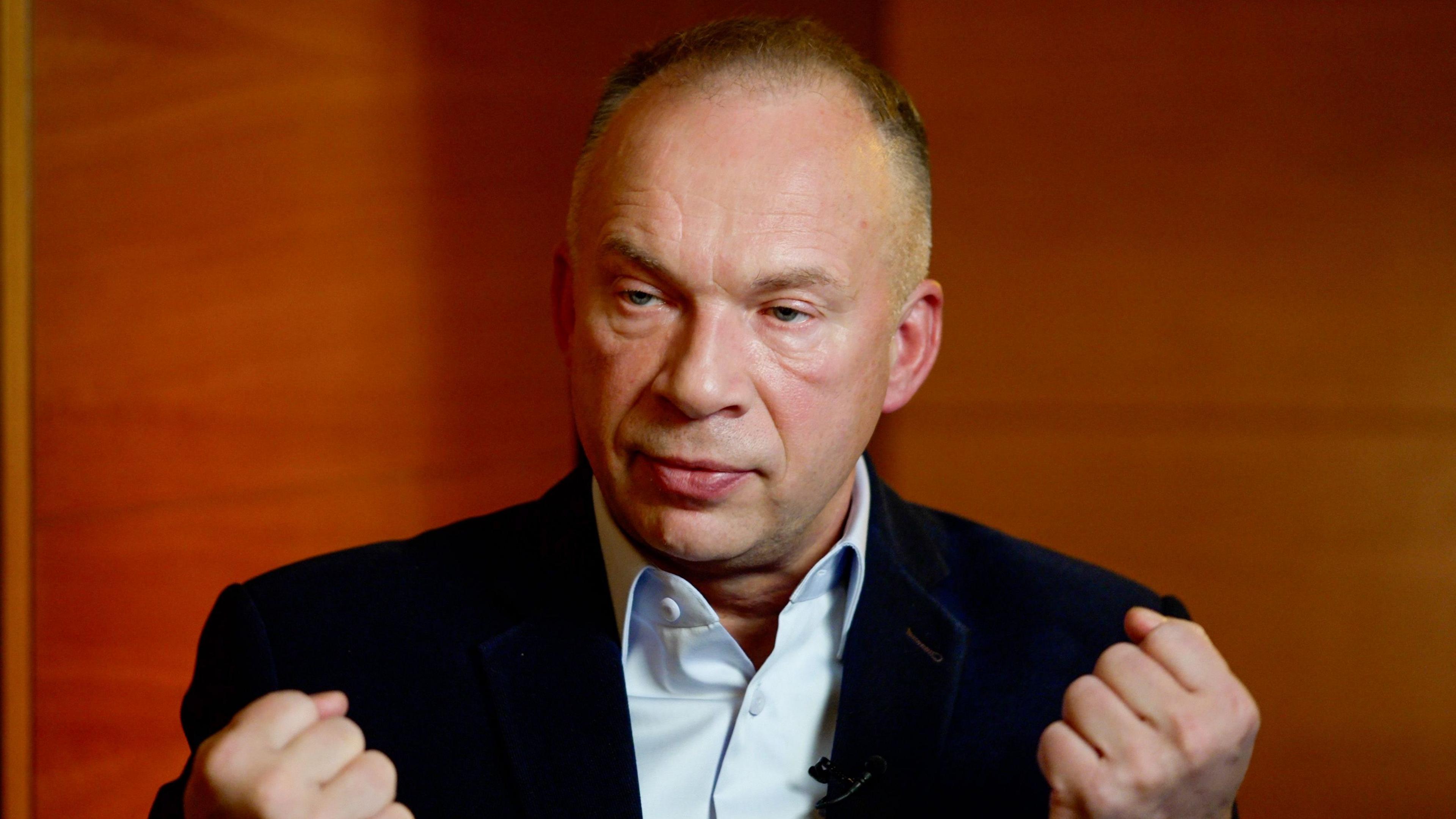
In a first interview since his dismissal, former Ukrainian commander‑in‑chief Oleksandr Syrskyi declared Russia’s attack force is stalled, citing heavy casualties and Ukraine’s drone superiority. He said Ukraine’s front line has stabilised after Russia’s losses outnumbered its own by as much as eleven‑to‑one. Syrskyi highlighted a clash with the defence minister over weapon supplies and blamed the conflict’s stalemate on Russia’s lack of tech upgrades. He also warned European allies to prepare for further escalation and predicted a shift toward AI‑driven weapons and unmanned systems.
Former commander-in‑chief Oleksandr Syrskyi has declared that Russia’s ability to push into Ukraine has collapsed, arguing the front line is now stable after the Red Army suffered heavy losses.
He gave the interview after being dismissed in the summer, when a sharp clash with defence minister Mykhailo Fedorov over arms procurement and strategy brought him into the spotlight.
Syrskyi said Ukraine’s success is tied to a sustained drone campaign with deep‑strike reach, and that the country’s Unmanned Systems Force has forced the Russians to lose more than twice as many men as Ukraine over the past years.
He quoted numbers that suggest Russia is losing six times more soldiers than Ukraine, and if only deaths are counted, the ratio climbs to eleven‑to‑one. The former chief pointed out that US‑based CSIS estimates Russia has killed roughly half a million troops since 2022, and that Kyiv has lost an estimated 150,000 of its own since 2022.
The “calm” of the frontline, according to Syrskyi, follows Russia’s limited gains in the summer—only 61 square kilometres of new territory in the first half of the year—showing a stalling offensive that he attributes to Ukrainian defences and the enemy’s lack of modern equipment.
He also referenced the 2024 Kursk incursion, which he claims was a necessary detour that disrupted Russian aims and allowed Kyiv to redirect its forces. The operation has been cited by the former chief as a key moment that checked Russian momentum.
In his remarks, Syrskyi called on European partners to stop dreaming about a protracted war and prepare for the winter. He predicted a surge of automated and AI‑enabled weapons—robots, unmanned ground vehicles and intelligent control systems—that will reshape the battlefield, but insisted that human soldiers will still lead the fight.