In brief
The recent crash at LaGuardia Airport, which claimed the lives of both pilots and injured multiple others, highlights critical failures in the collision prevention systems. The National Transportation Safety Board is now investigating the tragic event, noting that an air traffic controller inadvertently cleared a fire truck onto the runway just seconds before the plane's landing. The surface detection systems meant to prevent such incidents may have failed to predict the collision, sparking a discussion on the adequacy of current safety measures.
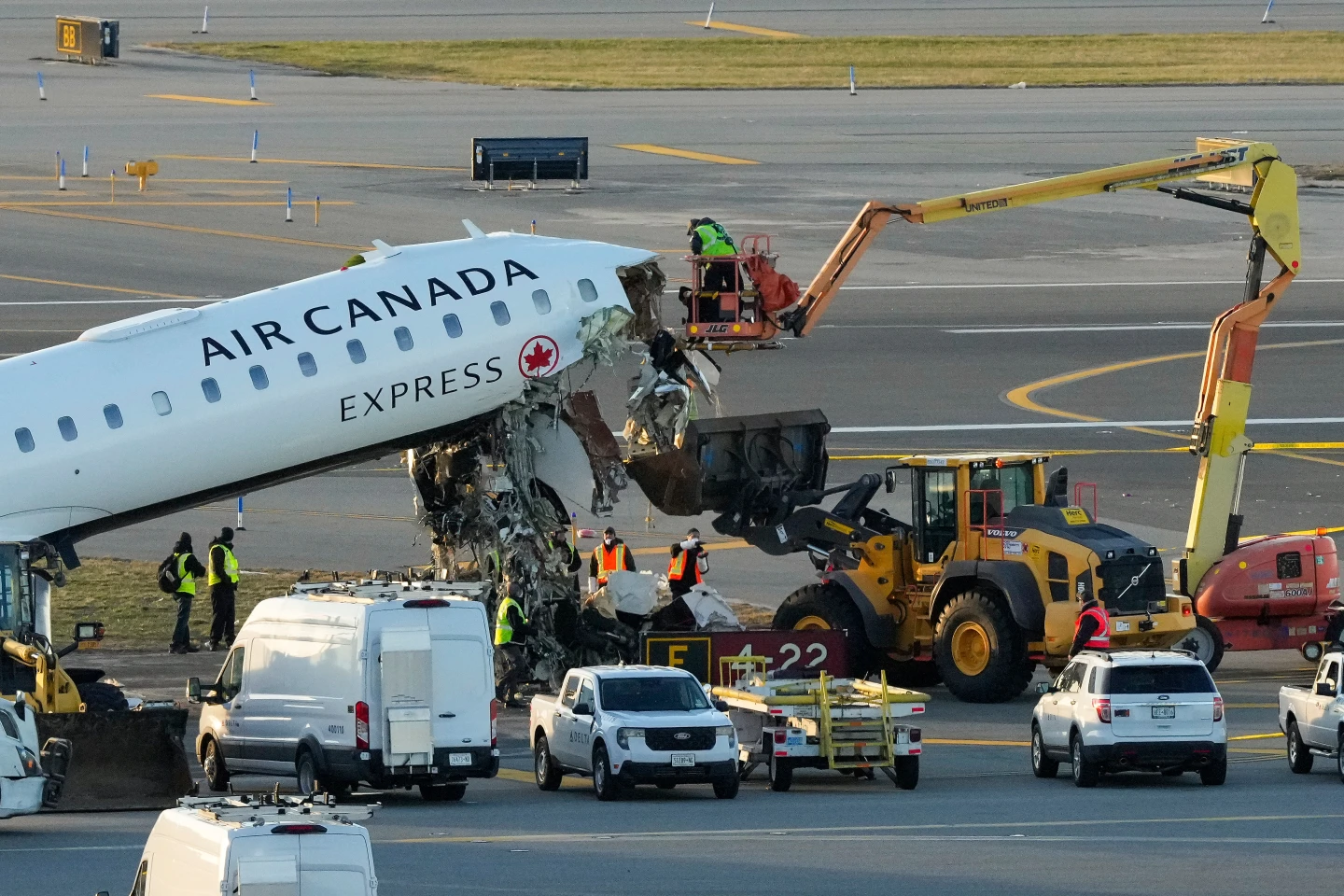
The systems in place at New York’s LaGuardia Airport to prevent ground collisions failed to keep an Air Canada jet from smashing into a fire truck that had just pulled out on the runway as the plane was landing.
The National Transportation Safety Board (NTSB) will determine what went wrong in the crash that killed both pilots and injured dozens of others. One of the two air traffic controllers on duty cleared the fire truck to cross the runway just 12 seconds before the plane carrying 76 people touched down. His frantic calls moments later for the truck to stop did not prevent the collision.
There will almost certainly be multiple factors that contributed to the crash because the aviation system has many layers of precautions in place to help reduce the risks of such events. Investigators are just beginning to interview everyone involved, examine the wreckage, and test everything that could have played a role. The mangled plane was being moved to a secure hangar Wednesday for further examination.
Surface tracking systems have prevented numerous crashes
LaGuardia is one of 35 major airports nationwide that have Airport Surface Detection Systems known as ASDE-X that combine radar data with information from transponders inside planes and ground vehicles. The system displays where every plane and vehicle is and sounds an alarm in the tower when it anticipates a potential collision.
Just last fall, the NTSB credited that warning system with preventing a private jet from running into a Southwest Airlines plane on a runway in San Diego in August 2023. That alarm got the attention of the controllers in time to avert disaster.
However, NTSB Chairwoman Jennifer Homendy stated that the ASDE system failed to sound an alarm at LaGuardia before the crash because it had trouble predicting it. One significant concern raised was that emergency vehicles at LaGuardia lacked transponders to send more precise data to the system.
Rick Castaldo, who assisted in designing and installing the ASDE systems, noted that the system is better at predicting potential collisions when vehicles or planes are in motion. Its computer struggles with predicting the actions of stationary vehicles. This was evident as the fire truck received clearance just seconds before the incident.
Runway warning lights signal when not to cross
Despite receiving clearance, the embedded lights in the pavement signaling when vehicles could cross should have been activated. Aviation safety expert Jeff Guzzetti emphasized that the fire truck's crew should have recognized the warning signals. Both the fire truck driver and the controller were likely distracted by an emergency from another aircraft at the time.
Ultimately, this tragic incident underlines the necessity of evaluating and enhancing the safety systems and procedures currently in place. The NTSB's investigation is ongoing, with further details to be examined to prevent such events in the future.