In brief
A state of emergency has been imposed in Khyber Pakhtunkhwa, the former prime minister Imran Khan’s stronghold, as the government cites terrorist threats. The move comes after weeks of mass protests demanding Khan’s release and has led to road blockades, partial internet shutdowns and an army presence. Critics warn the decision could backfire, deepening public anger and eroding civilian control. The power struggle also coincides with growing militancy and strained regional relations, raising concerns about Pakistan’s stability.
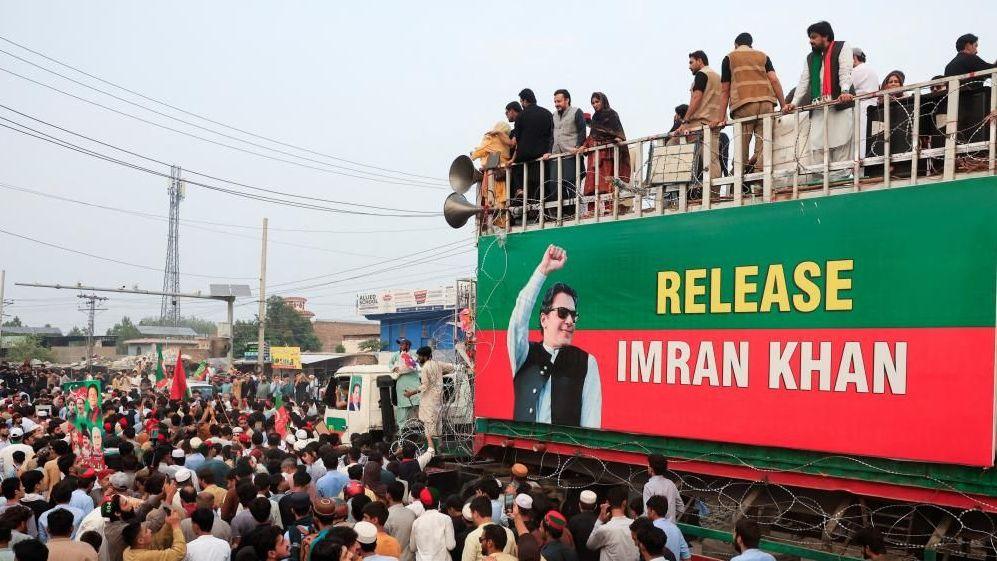
Pakistan has announced a state of emergency in the province of Khyber Pakhtunkhwa, Imran Khan’s political stronghold, after weeks of mass protests demanding the former prime minister’s release.
The federal government says the emergency is needed to protect residents from a terrorism threat, claiming the PTI provincial administration had ties with violent militants. No evidence has been shown, and the statement was criticised as a political tactic.
During the first day of the emergency, schools were closed, internet services were temporarily cut and roadways were blocked by shipping containers. Police softened the restriction by the next day, and schools reopened in Peshawar, while most of the province saw a return to normalcy.
The crackdown has curbed protests. Many PTI leaders have gone into hiding, and the party’s chief minister, who has not been seen publicly, is alleged to be in protective custody.
The emergency comes at a time when Pakistan faces a surge in militancy, a high ranking on the Global Terrorism Index and tense relations with both Afghanistan and India. Analysts warn that the move could intensify public dissent and further polarise the political landscape.
The decision to impose emergency rule is seen by some as an effort by the military establishment to consolidate power, while critics argue it risks undermining civilian governance and could provoke a backlash from Khan’s supporters.
Some experts believe the timing of the emergency coincides with the large marches that have been taking place, suggesting a direct link between the protest movement and the federal response. The government argues it was a precautionary measure, while opposition voices see it as an overdue clamp‑down on political opposition.
With its veteran political leader Imran Khan in custody since August 2023 and ongoing corruption allegations he calls politically motivated, the protests have highlighted frustrations within the PTI ranks and a broader desire for political change.
International observers caution that this move could have unintended consequences, potentially inflaming public sentiment and jeopardising Pakistan’s security in an already volatile region. The future remains uncertain as the government balances the need for stability with the risk of escalating unrest in Khyber Pakhtunkhwa.