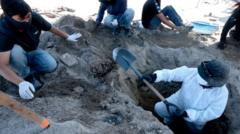
In early March, three human crematory ovens were discovered at Izaguirre Ranch, situated in the Mexican state of Jalisco, a site that has become emblematic of the region's notorious drug cartel violence. Initially prompted by reports of a potential mass grave, a group of activists representing families of the countless disappeared set out to the ranch with hopes of recovering their loved ones. Instead, they stumbled upon a grim reality: hundreds of items such as shoes, clothing, and personal belongings alongside remains of human bone fragments.
Members of the Buscadores Guerreros de Jalisco, the activist group on site, were dismayed by the finding of not only personal effects but also children's toys, signaling the extent of desperation faced by families. Luz Toscano, a member of the collective, noted the emotional turmoil as families recognized shoes that resembled those of their missing relatives. Toscano calls for a thorough examination of these items so families can investigate and identify their missing loved ones.
The revelations come amidst a backdrop of discontent regarding the local police, who had previously raided the same ranch last September but failed to uncover any significant evidence of the ongoing violence. Critics and families suspect a possible collusion between local law enforcement and the cartel, leading to further calls for accountability.
In response, Jalisco State Governor Pablo Lemus pledged cooperation with federal authorities and denied any wrongdoing by local officials. However, this incident has put pressure on President Claudia Sheinbaum's administration, casting a shadow over her early tenure. She directed federal investigators to take over the case and urged caution in jumping to conclusions while the investigation unfolds.
As officials swarm the site for a forensic examination, the implications of the findings continue to resonate. Activists and families united in grief are demanding answers and action from the government in light of the many unaddressed disappearances. Rosario Magaña, whose son vanished in 2017, expressed her ongoing frustration and desperation, highlighting the pressing need for the authorities to address systemic issues surrounding cartel violence in Jalisco.
The Izaguirre Ranch now stands as a harrowing reminder of the struggle faced by countless families entrenched in the quest for their lost loved ones while grappling with an entrenched culture of violence and fear perpetuated by drug cartels.
Members of the Buscadores Guerreros de Jalisco, the activist group on site, were dismayed by the finding of not only personal effects but also children's toys, signaling the extent of desperation faced by families. Luz Toscano, a member of the collective, noted the emotional turmoil as families recognized shoes that resembled those of their missing relatives. Toscano calls for a thorough examination of these items so families can investigate and identify their missing loved ones.
The revelations come amidst a backdrop of discontent regarding the local police, who had previously raided the same ranch last September but failed to uncover any significant evidence of the ongoing violence. Critics and families suspect a possible collusion between local law enforcement and the cartel, leading to further calls for accountability.
In response, Jalisco State Governor Pablo Lemus pledged cooperation with federal authorities and denied any wrongdoing by local officials. However, this incident has put pressure on President Claudia Sheinbaum's administration, casting a shadow over her early tenure. She directed federal investigators to take over the case and urged caution in jumping to conclusions while the investigation unfolds.
As officials swarm the site for a forensic examination, the implications of the findings continue to resonate. Activists and families united in grief are demanding answers and action from the government in light of the many unaddressed disappearances. Rosario Magaña, whose son vanished in 2017, expressed her ongoing frustration and desperation, highlighting the pressing need for the authorities to address systemic issues surrounding cartel violence in Jalisco.
The Izaguirre Ranch now stands as a harrowing reminder of the struggle faced by countless families entrenched in the quest for their lost loved ones while grappling with an entrenched culture of violence and fear perpetuated by drug cartels.