In brief
Bunia’s Nyamurongo cemetery has become a quiet front line in the fight against Ebola, with graves being dug far more rapidly and funerals shorted to minimise risk. The community must now follow strict guidelines, such as placing bodies in leak‑proof bags and coffins with transparent panels. Despite the fear and changes, mourners still try to honour their loved ones, and health workers work to bridge cultural expectations with science. International aid groups and WHO experts push for a balance between trauma care and infection control.
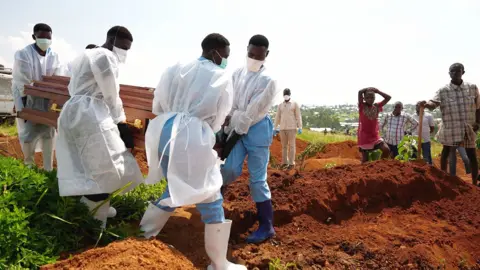
Bunia, a city in the north‑east of the Democratic Republic of Congo, is the hot‑spot of a new Ebola outbreak. The town’s Nyamurongo cemetery has become an unlikely front line, where dozens of graves are pulled up each day and families gather to say goodbye in silence.
“Today is the sixth time I’ve come to the cemetery,” says Joel Lonza Makumbu. He added that yesterday he buried his father and today that his mother. The grief is palpable, yet every death must be handled with the same stringent rule set to halt the virus.
Ebola is most dangerous when contact occurs with infected fluids such as blood, urine or semen. As a result, the International Federation of the Red Cross and the World Health Organization (WHO) have introduced new protocols: bodies are placed in leak‑proof bags, then sealed inside a coffin that has a transparent panel so mourners can see the dead face‑to‑face without contact.
The shift also means traditional rites like washing the body are banned, and families who once surrounded the burial with songs and celebratory feasting now attend in quiet, sparsely lit streets.
Anko, a WHO anthropologist, works beside local elders to explain why the changes are needed. “We must protect the community and the volunteers, but we also want to honour the traditions as much as possible,” she says. One resident noted that special requests are still accommodated, provided they do not increase risk.
The most delicate cases involve pregnant women. Cultural belief dictates that the fetus should not lie in the body’s grave; therefore the child‑bearing mother’s fetal remains are either pulled out or buried with her, depending on circumstances. This procedure, while sensitive, also involves fluid contact, so teams have to negotiate carefully with families.
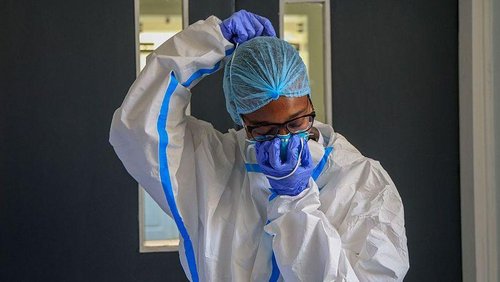
A recent IFRC volunteer team, wearing full personal protective equipment (PPE), praised the meticulous steps taken: from collecting the body in a tented mortuary to transporting it with disinfected gloves and finally burying it within minutes. The volunteers also decontaminate their gear before each departure.
Notably, Joel’s story illustrates the disaster’s toll: “We have lost three sisters and a brother‑in‑law,” he says, revealing the heavy human cost. He warns that families with relatives still in treatment centers could see more burial visits, as the virus claims lives in the region’s capital.
As the crisis unfolds, both health workers and communities are learning to strike a fine balance between public health measures and cultural practices. The efforts of IFRC, WHO, and local leaders continue to shape safer burial rituals while keeping the memories of the lost alive.
For updates on the outbreak, follow BBC Africa on social media.