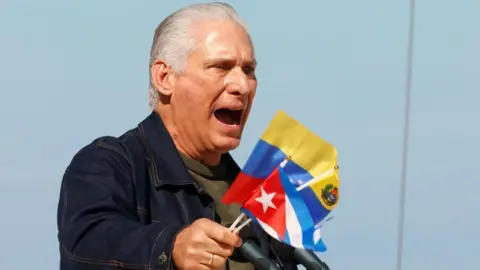
After Venezuela, there is no nation in the Americas more affected by the events in Caracas than Cuba.
The two nations have shared a political vision of state-led socialism since a fresh-faced Venezuelan presidential candidate, Hugo Chávez, met the aged leader of the Cuban Revolution, Fidel Castro, on the tarmac at Havana airport in 1999.
For years, their mutual ties only deepened, as Venezuelan crude oil flowed to the communist-run island in exchange for Cuban doctors and medics travelling in the other direction.
After the deaths of the two men, it was Nicolás Maduro - trained and instructed in Cuba - who became Chávez's handpicked successor, chosen partly because he was acceptable to the Castro brothers. He represented continuity for the Cuban revolution as much as the Venezuelan one.
Now he, too, is gone from the seat of power in Caracas, forcibly removed by the US's elite Delta Force team. The prospects for Cuba in his absence are bleak.
For now, the Cuban government has robustly denounced the attack as illegal and declared two days of national mourning for 32 Cuban nationals killed in the US military operation.
Their deaths revealed a key fact long-known about Cuban influence over the Venezuelan presidency and military: Maduro's security detail was almost entirely made up of Cuban bodyguards. Cuban nationals are in place in numerous positions in Venezuela's intelligence services and military too.
Cuba had long denied having active soldiers or security agents inside Venezuela, but freed political prisoners have often claimed they were interrogated by men with Cuban accents while in custody.
Furthermore, despite endless public proclamations of solidarity between the two nations, in truth, the Cuban influence behind the scenes of the Venezuelan state is believed to have driven a wedge between ministers most-closely aligned with Havana and those who feel that the relationship first established by Chávez and Castro has become fundamentally unbalanced.
In essence, that faction considers that these days Venezuela gets little in return for its oil.
Venezuela is believed to send around 35,000 barrels of oil a day to Cuba - none of the island's other main energy partners, Russia and Mexico, even come close.
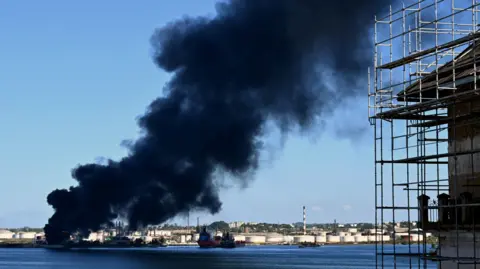
The Trump administration's tactic of confiscating sanctioned Venezuelan oil tankers has already begun to worsen the fuel and electricity crisis in Cuba.
At best, the future looks increasingly complex for the beleaguered Caribbean island without Maduro at the helm in Caracas. Cuba was already in the grip of its worst economic crisis since the Cold War.
There have been rolling blackouts from end to end of the island for months, affecting ordinary Cubans with weeks without reliable electricity.
The island has experienced a widespread outbreak of mosquito-borne diseases in recent weeks, with huge numbers of people affected by dengue fever and chikungunya, straining Cuba's healthcare system.
Such circumstances instill dread among Cubans that the flow of Venezuelan oil to their country could be halted by Delcy Rodríguez, who might need to appease the Trump administration after Maduro's ousting.
President Trump insists that Washington is now calling the shots in Venezuela. This has upset critics who accuse the White House of reverting to classic imperialist tactics seen during the Cold War.
In this context, Trump has coined the term 'Donroe Doctrine', hinting at a right to intervene in Latin America as it is seen as the US's sphere of influence.
Cuba has resisted past challenges and remains defiant in light of the latest US interventions in the region. President Miguel Díaz-Canel continues to honor those who fell in the mission, denouncing the US as the aggressor.