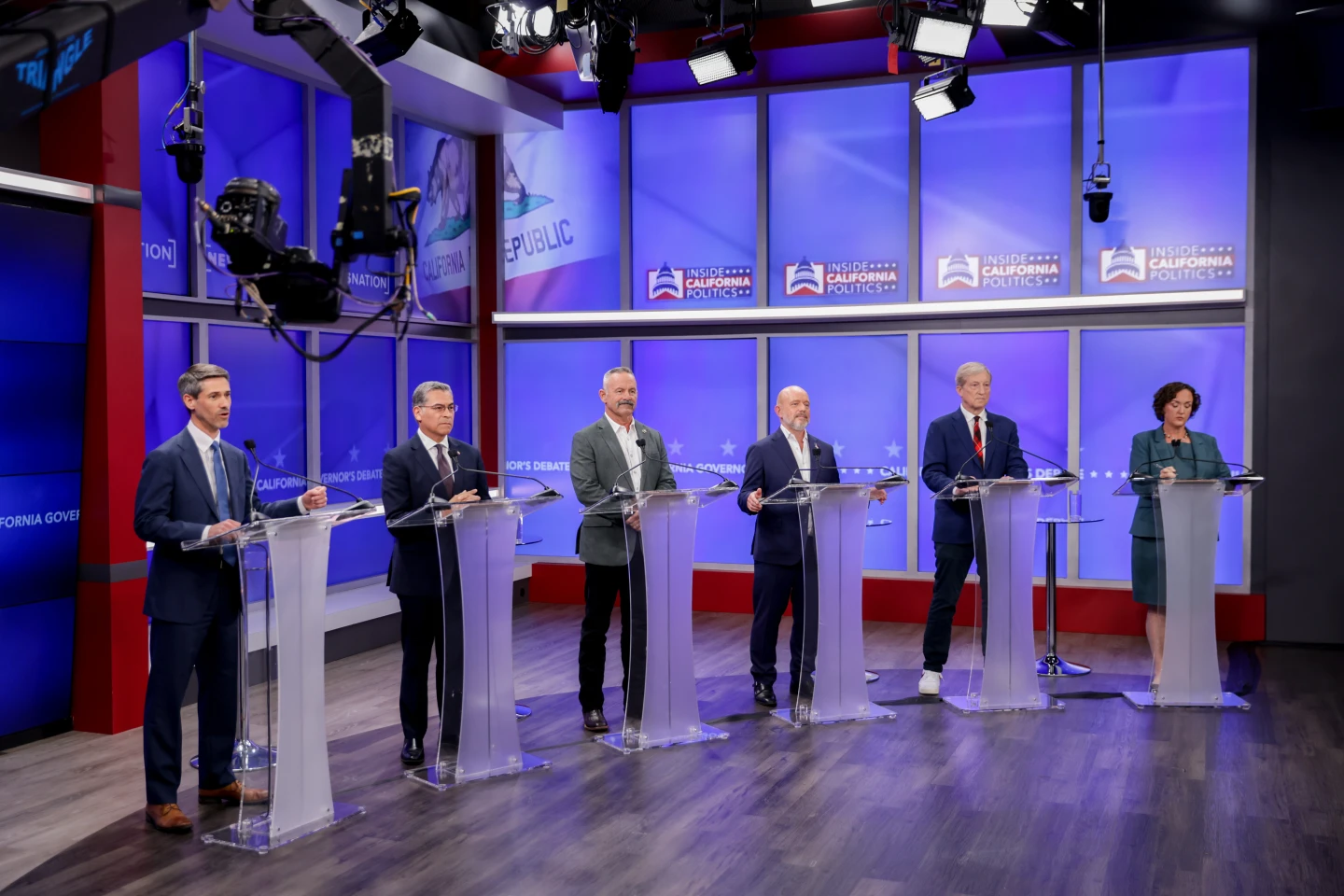
LOS ANGELES (AP) — The gubernatorial debate in California revealed significant ideological divides among the candidates on issues like homelessness, taxes, and social media regulations for minors. As California prepares for a unique primary election with over 50 candidates on the ballot, key figures in the race engaged in a cautious yet revealing exchange of views.
With mail-in ballots set to be dispatched early next month for the June 2 primary, the candidates, including two leading Republicans—Steve Hilton and Chad Bianco—and four prominent Democrats, took the stage for a lively debate, seeking to outline their platforms. Former Congresswoman Katie Porter and billionaire activist Tom Steyer emphasized their plans for social issues and economic reform, while Bianco and Hilton criticized the effectiveness of existing Democratic policies under Governor Gavin Newsom.
Over 90 minutes, the candidates addressed pressing topics such as housing solutions, wildfire management, and the need for changes in social media laws affecting children. Steyer and Becerra promoted a ban on social media for children under 16, while the Republicans echoed calls for parental involvement in screen time decisions.
Challenges around homelessness dominated discussions, with Democrats defending state expenditures while Republicans labeled these efforts as a failure. Everything has taken us in the wrong direction, Hilton stated, illustrating the sharp critique of Democratic leadership.
Steyer's wealth and history were repeatedly scrutinized, spotlighting his previous involvement in private prisons contrasted with claims of supporting low-income housing projects. In a field where Democrats have held a tight grip on power, this election could lead to historic developments if the crowded primary results in a Republican advance to the general election.
Hosted by Nexstar Media Group, the debate was streamed across various channels, providing a platform for candidates to present their perspectives to California's electorate, while the question of addressing the state’s challenges looms large.