In brief
Argentina's Congress has approved a significant amendment to the Glacier Law, easing restrictions on mining in glacier regions. The bill, which has sparked considerable controversy, transfers the responsibility of protecting these vital water sources from the national government to provincial authorities. Supporters claim it promotes local resource utilization, while opponents warn it jeopardizes essential water reserves for millions. Protests have erupted, emphasizing the need to safeguard glaciers amid climate change challenges.
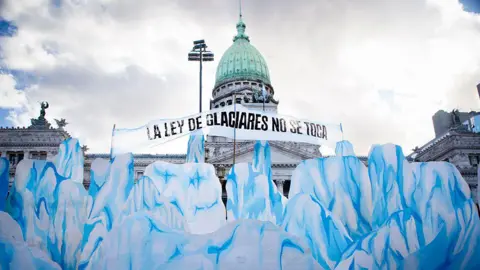
Argentina's Congress has passed a controversial amendment making it easier to mine in glacier regions, a move environmentalists say weakens protections for crucial water sources. The pioneering Glacier Law, approved in 2010, prohibited mining and exploration in glacier areas by designating them as protected water reserves. The recent reform shifts the responsibility for defining protected glacier regions from the Argentine Institute for Snow, Ice and Environmental Sciences (Ianigla) to provincial governments.President Javier Milei, who endorsed the reform, stated it empowers provinces to use their resources more effectively and facilitates mining activities in previously protected areas. However, this legislative change has incited protests, with opponents arguing it risks a vital resource—water. Without water, we can't even think about a growth and development project, said Congresswoman Natalia de la Sota.Despite criticism, backers of the bill, such as Congresswoman Nancy Picón Martínez, assert that the mining industry is unfairly demonized and that the law continues to protect glaciers. Following this reform, glaciers and periglacial environments will only be deemed non-strategic water reserves if provincial leaders can demonstrate their lack of importance.With over 16,968 glaciers providing water to 36 river basins across 12 provinces, the melted water from glaciers is crucial for reducing the impact of droughts—especially in regions like Mendoza, which are becoming increasingly arid due to climate change. As protests continue, the debate over the balance between resource extraction and environmental protection remains contentious in Argentina.