In brief
Recent analyses of fossilized jaws show that ancient octopuses, measuring up to 62 feet in length, were formidable hunters during the age of dinosaurs. Unlike modern perceptions of these creatures, they were equipped to hunt alongside or even against other marine predators. The findings suggest a need to reevaluate the role of octopuses in ancient marine ecosystems.
NEW YORK (AP) — The top predator prowling the seas during the age of the dinosaurs 100 million years ago may have been the octopus.
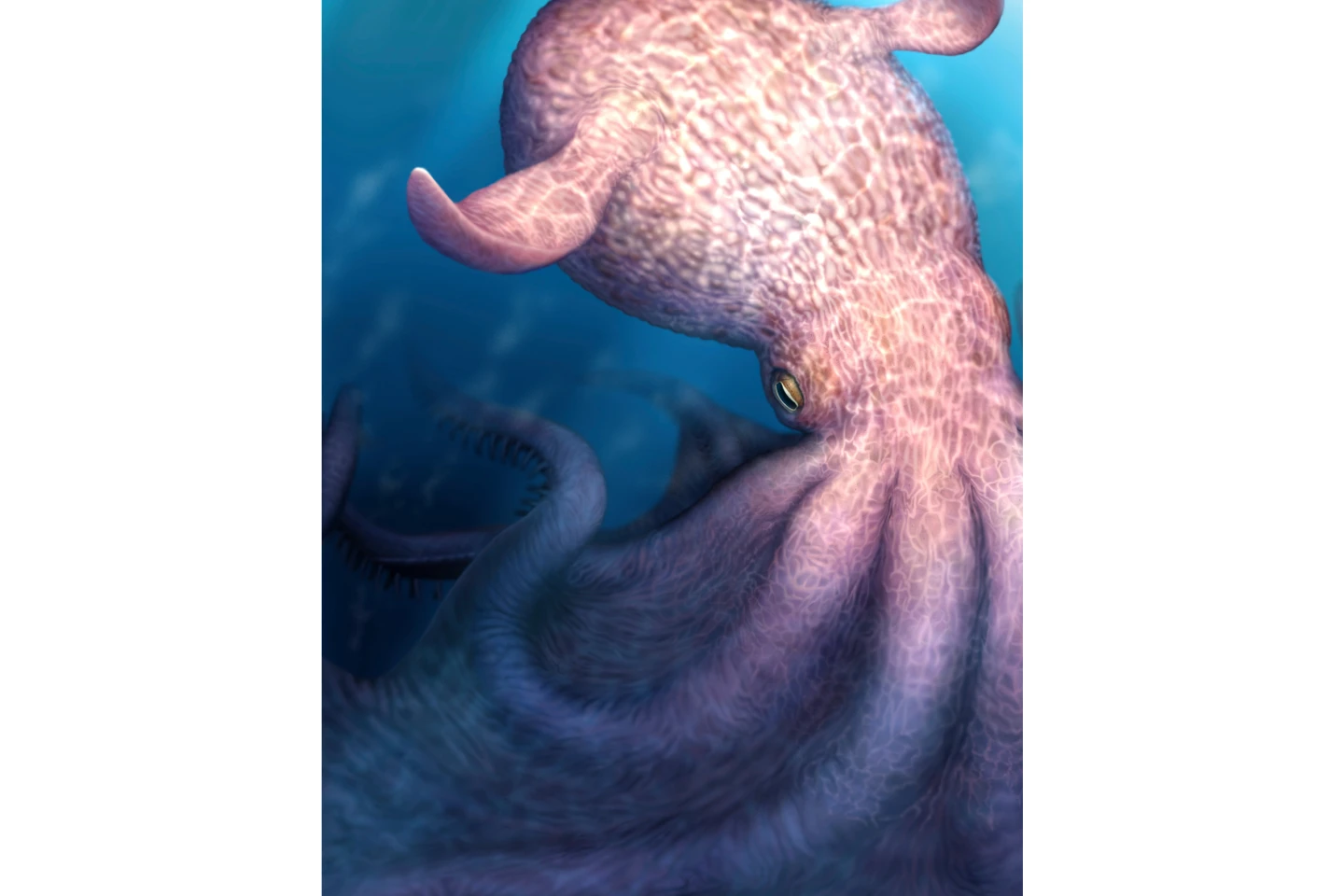
New analyses of fossilized jaws reveal that massive, kraken-like octopuses once hunted alongside other marine predators. They boasted eight arms and long bodies that extended more than 60 feet (18 meters), rivaling other carnivorous marine reptiles.
“These krakens must have been a fearsome sight to behold,” said Adiel Klompmaker, a paleontologist at the University of Alabama, who did not partake in the new research.
Dinosaur enthusiasts know that late Cretaceous-era waters were ruled by sharp-toothed sharks and sea reptiles known as mosasaurs and plesiosaurs. However, the role of octopuses has been less understood.
One reason for this oversight is the study of giant octopus relatives from the same era and small species that drilled into clams, while their soft bodies made fossilization challenging. Yet, their tough chitin beaks are capable of crushing bony and shelled creatures.
In the latest study, researchers analyzed 15 ancient octopus jaws from prior discoveries in Japan and Canada, along with 12 additional jaws identified through digital fossil mining techniques. This method scans rock cross-sections to uncover hidden fossils.
By comparing these jaws to modern octopus specimens, the researchers estimated that these ancient giants ranged from 23 to 62 feet (7 to 19 meters) in length. The largest jaw significantly surpassed any modern octopus jaw, according to co-author Yasuhiro Iba from Hokkaido University.
The intense wear on the jaws, consisting of scratches and chips, implies they preyed on hard-shelled creatures, indicating a capability to crush and consume tough prey.
While access to stomach contents would clarify their diet, these ancient octopuses likely snatched various sea creatures using their flexible arms, leading some scientists like Neil Landman to call for investigations into additional fossil sites for further insights into the ancient marine food web.
“It’s a big old planet,” Landman noted. “So we have lots to look at to piece together the marine ecosystem through time.”
The findings were published Thursday in the journal Science.