In brief
As military action in Gaza leads to destruction, experts warn of significant asbestos exposure from rubble, with long-lasting health implications for the affected population.
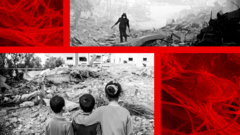
The ongoing military operations in Gaza have inadvertently unleashed a hidden danger: asbestos contamination in the rubble. Asbestos, once a common building material, is known to release harmful fibers when disturbed, posing grave health risks that can lead to long-term diseases such as cancer. While many countries have banned its use, this hazardous mineral is still prevalent in older structures, particularly in Gaza's refugee camps, established for Palestinians displaced during the 1948-49 Arab-Israeli war.The United Nations Environment Programme (UNEP) projects that as much as 2.3 million tons of rubble in Gaza could be tainted with asbestos. Professor Bill Cookson, at the helm of the National Centre for Mesothelioma Research in London, describes the environment in Gaza as "very, very toxic." He emphasized that the adverse health outcomes are not immediate; rather, they will manifest over time, often decades later, affecting many, especially children.As air strikes and military actions disturb the rubble, asbestos fibers too small for the naked eye can be inhaled, leading to severe conditions like asbestosis and mesothelioma. With typical onset occurring 20 to 60 years post-exposure, there's a looming health crisis that will inevitably emerge within the densely populated enclave--which houses approximately 2.1 million residents in an area slightly larger than a quarter of London.Dr. Ryan Hoy, who has studied dust inhalation, points out the difficulty of avoiding these microscopic toxic particles, especially in such crowded conditions. Experts on the ground highlight that urgent life-threatening issues take precedence over the lesser-known hazards of asbestos exposure, leaving the population largely unaware of the risks posed by the environment they're trying to rebuild. Chiara Lodi, a medical coordinator for NGOs aiding medical efforts, expressed that the immediate dangers of military strikes overshadow concerns about dust inhalation among the civilians.A prior UN survey conducted after the 2009 conflict identified asbestos in various local debris, including older buildings and agricultural structures. The risks related to asbestos are well-documented; even the least hazardous type, "white asbestos," can still pose serious health threats. Unfortunately, due to its persistent nature, clearing away contaminated debris presents another monumental challenge. UNEP indicates that the cleanup process could span 21 years and cost an estimated $1.2 billion.In contrast to the United States' response to the 9/11 attacks, where the health impacts of toxic dust were methodically analyzed, the ongoing conflict in Gaza complicates similar assessments. As the accurate count of casualties continues to rise, health experts warn that untreated asbestos exposure may claim more lives in the future than the violence itself.As efforts to reconstruct Gaza follow the military conflict, the need for strategic management of the debris containing asbestos is critical. Mismanagement could exacerbate an already dire situation, releasing hazardous fibers that could impact the health of countless individuals for generations to come.