In brief
As Poland approaches a crucial presidential vote, surveys show a neck-and-neck race between liberal candidate Rafal Trzaskowski and conservative contender Karol Nawrocki, with substantial implications for the pro-EU government’s future.
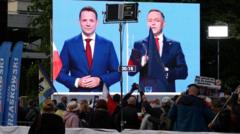
In a significant election set for Sunday, Poles will choose between two contrasting visions for the nation, with liberal Warsaw Mayor Rafal Trzaskowski holding a slight edge in opinion polls over conservative historian Karol Nawrocki. The presidential role in Poland is primarily ceremonial; nonetheless, the ability to veto legislation carries considerable weight, especially as the ruling coalition struggles to unify their parliamentary majority.Nawrocki, a strong opponent of Donald Tusk's coalition government, is expected to wield the veto more frequently than current President Andrzej Duda, who is ineligible to run again after two consecutive terms. Tusk has found it challenging to implement his campaign promises, such as legal abortion and judicial reforms, owing to Duda's veto power and the existing coalition rifts. Despite these hurdles, Trzaskowski has vowed to align with Tusk's government to facilitate progress.The upcoming second-round runoff hinges on voter turnout, particularly in securing support from far-right candidates who performed well in the first round. While these far-right voters resonate with Nawrocki's traditional values, some libertarians express disapproval of his advocacy for extensive state welfare policies.Both candidates have led rival patriotic demonstrations in Warsaw, each vying to showcase their support base. Nawrocki’s rally attendees primarily displayed Polish flags without European Union symbols, reflecting his nationalistic stance. His supporters articulated a focus on family and national interests, signaling a departure from EU influence.At 42, Nawrocki, previously the head of the Institute of National Remembrance, has garnered a reputation for promoting traditional Catholic values and representing rural concerns amid EU regulatory pressures. His background in emphasizing Poland's historical narrative has strengthened his image as a capable leader, despite controversies linked to his past.On the other side, Trzaskowski, a multilingual politician and Tusk's deputy in the Civic Platform party, appeals to a younger, urban demographic. Advocating for social issues like LGBT rights and migration, he presents himself as a staunch European ally, drawing strong support from voters valuing EU integration.Amid the uncertainty ahead, the Polish electoral outcome holds significant potential to impact the nation's political landscape, particularly in the relationship between Poland and Europe, underscoring the contrasting ideologies represented by these two candidates as they strive to captivate their respective audiences ahead of the pivotal election.