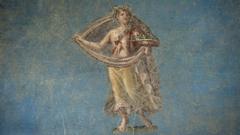
After two millennia of preservation beneath layers of volcanic debris, a remarkable discovery has emerged from the ancient city of Pompeii—a luxurious private bathhouse that may be the largest ever found there. This once-in-a-century find includes a series of hot, warm, and cold rooms, impressive artworks, and an expansive plunge pool. According to Dr. Gabriel Zuchtriegel, director of the Archaeological Park of Pompeii, this setting nearly presents the ambiance as if the inhabitants had just stepped out moments before.
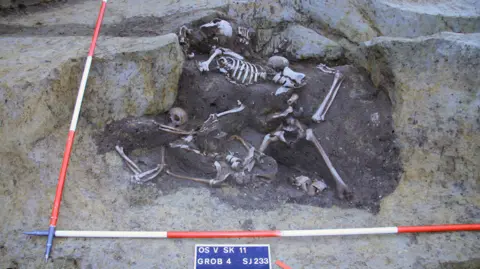
The bathhouse features a changing room adorned with vibrant red walls and an intricately designed mosaic floor. The discovery also provided a chilling insight into the eruption; the remains of two individuals were found within a barricaded room, victims of the devastating pyroclastic flow unleashed by Mount Vesuvius in AD 79. A woman, aged between 35 and 50, grasped jewelry and coins while a younger male was discovered in a fetal position, likely succumbing to the eruption’s deadly aftermath.
Currently, one-third of the ancient city remains buried, but this major excavation, the most extensive in recent history, has uncovered an entire block comprising not only the luxurious bathhouse but also a laundry, bakery, and public buildings believed to have been owned by a prominent local figure, possibly Aulus Rustius Verus, signifying his elite status.
The bathhouse is distinguished for its scale, accommodating potentially 20 to 30 bathers at once. Visitors would transition through a series of lavishly decorated rooms: the hot room with heated air circulating beneath the floor, the warm room for skin treatments, and culminating in the vibrant frigidarium, or cold room, surrounded by striking frescoes and red columns.
Additionally, tools and construction materials scattered throughout the house indicated ongoing renovations at the time of the eruption, with significant finds including a grand banqueting room and an intimate prayer chamber. Yet, the grave discovery of the two remains starkly contrasts the opulence of the surrounding rooms, highlighting the differences in social status that echoed through time—where the slaves toiled in the furnace room adjacent to the lavish bath complex.
As the excavation draws towards completion, archaeologists remain hopeful that even more insights into the lives of Pompeii's residents will emerge, offering a deeper understanding of ancient Rome. With plans to eventually open the site to the public, the ongoing work not only captivates the imagination but also paints a vivid portrait of life, tragedy, and luxury in one of history’s most enigmatic cities.