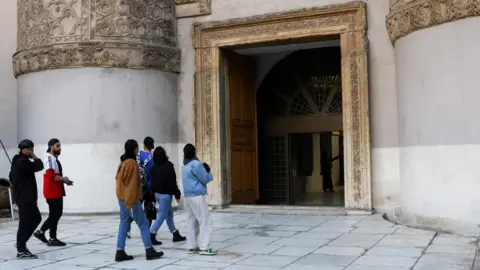
Near one of the Seven Wonders of the Ancient World - the Great Pyramid of Khufu at Giza - Egypt is officially opening what it intends as a cultural highlight of the modern age. The Grand Egyptian Museum (GEM), described as the world's largest archaeological museum, is packed with some 100,000 artefacts covering some seven millennia of the country's history from pre-dynastic times to the Greek and Roman eras. Prominent Egyptologists argue that its establishment strengthens their demand for key Egyptian antiquities held in other countries to be returned – including the famed Rosetta Stone displayed at the British Museum. A main draw of the GEM will be the entire contents of the intact tomb of the boy king Tutankhamun, displayed together for the first time since it was found by British Egyptologist Howard Carter. They include Tutankhamun's spectacular gold mask, throne and chariots. Costing some $1.2 million, the vast museum complex is expected to attract up to 8 million visitors a year, boosting Egyptian tourism, which has been hit by regional crises. Besides the Tutankhamun exhibit and a display of the 4,500-year-old funerary boat of Khufu, much of the museum has been open to the public since last year. The GEM signifies a new era in the portrayal and research of Egypt's rich history.
Grand Egyptian Museum Opens with Full Display of Tutankhamun's Tomb
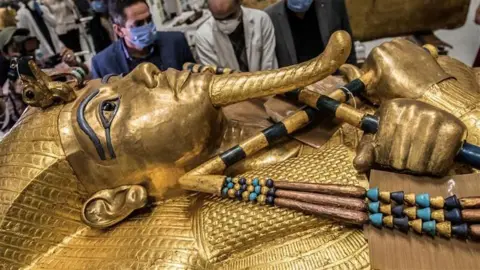
Grand Egyptian Museum Opens with Full Display of Tutankhamun's Tomb
The Grand Egyptian Museum, the world's largest archaeological museum, has officially opened its doors, showcasing the complete contents of King Tutankhamun's tomb for the first time ever.
Located near the Great Pyramid of Giza, the Grand Egyptian Museum has opened to the public, featuring about 100,000 artefacts across thousands of years of Egyptian history. A key attraction is the complete exhibition of Tutankhamun's tomb, including the iconic gold mask and throne. The museum also aims to bolster Egypt's calls for the return of its antiquities housed abroad. With a projected annual visitor count of 8 million, the GEM aims to rejuvenate Egypt's tourism sector.