In brief
Trump's recent remarks about Liberia's leader's English proficiency have drawn attention to the country's rich historical ties to the U.S. and the need for better understanding of African nations. Liberia, founded by freed American slaves, has a capital named after President James Monroe, shares a similar flag with the U.S., and has produced notable figures like Nobel laureate Ellen Johnson Sirleaf. However, reactions to Trump's comments underscore ongoing misunderstandings regarding Africa's diverse cultures and languages.
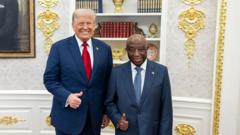
U.S. President Donald Trump recently made headlines by praising Liberian President Joseph Boakai for his "good English" skills, which leads to significant discussion about Liberia's background and its historical ties with the United States. While Trump recognized Boakai's communication abilities, he overlooked the rich tapestry of Liberia’s history that includes a strong connection with America, stemming from its foundation by freed African-American slaves back in 1822. Liberia declared its independence in 1847, and throughout its history, the similarities between the two nations have remained evident. For example, Monrovia, Liberia's capital, is named after James Monroe, the fifth U.S. president and a staunch supporter of the American Colonization Society, which helped settle African-Americans in West Africa. The architectural designs of Monrovia echo American structures, and many street names carry the legacy of U.S. historical figures.An interesting fact is that the Liberian flag closely resembles that of the U.S., showcasing alternating red and white stripes and a single white star that signifies Liberia as Africa’s first independent republic. Notably, the flag's design was created by seven African-American women, highlighting the intertwined destinies of the two nations.The cultural connections extend to sports, with Timothy Weah, son of former President George Weah, making waves in American and international football. Liberia's history includes notable leaders such as Ellen Johnson Sirleaf, the continent's first elected female president, who played a pivotal role in maintaining peace post-civil war and won a Nobel Peace Prize along with her efforts for women’s rights.However, despite these profound connections, Trump's comments stirred a conversation about global perceptions and awareness of African nations. The reactions among Liberians ranged from surprise to calls for more education regarding Africa's diversity beyond the stereotypes of conflict and poverty.Many citizens argue that the U.S. president’s remarks point to a broader issue of ignorance, as not everyone understands the depth of Liberia's educational background. Some Liberians felt that Trump should have been more informed, reflecting a need for greater cultural awareness, while others interpreted his compliment as sincere. As discussions continue, it is clear that while Liberia and the U.S. share a unique and significant bond, misunderstandings about Africa's languages and cultures still persist on a global scale.