In brief
The Guna community has left their island home behind as rising sea levels threaten their lifeways, revealing both challenges and hopes in a new settlement.
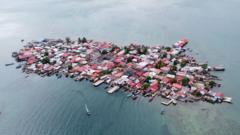
On the remote island of Gardi Sugdub, where the Guna people have lived for generations, the sound of vibrant community life has faded. Delfino Davies, the custodian of their small museum, reflects, "Before, you could hear children shouting... but now all the sounds have gone." Due to alarming projections indicating that the island may be uninhabitable by 2050 due to rising sea levels, the Guna community has become Panama's first group to relocate in response to climate change.In June 2024, approximately 1,000 residents departed the island, leaving behind their wooden and tin homes for prefabricated houses on the mainland. While some champions of climate adaptation view this relocation as a model for at-risk communities worldwide, it has led to emotional divisions within the Guna people. Many have left to seek safety and opportunity, but some, like Delfino, hesitate to abandon their island home where they feel deeply connected to their traditions and heritage.As floods increasingly threaten their daily lives, others found the move necessary. Magdalena Martínez recalls the waves lapping at their homes, making everyday tasks impossible, leading her to join the exodus despite the emotional toll. "You feel like you are leaving pieces of your life on the island," she admits, missing not just her house, but friends and the essence of island living.The new settlement, Isberyala—located just a boat ride away from Gardi Sugdub—is starkly different. Here, homes align neatly along asphalt roads, offering more space for gardens and leisure. Despite the promise of better living conditions, the sense of loss is profound. Schooling for children has improved, but cultural preservation remains a top priority, with traditional Guna stories and practices being taught to the younger generations.Local leaders like Tito López maintain hope for cultural continuity despite changes in their physical environment. "My identity and my culture aren't going to change; it’s just the houses that have changed," he insists, as community members work to preserve their traditions even in new surroundings.Despite improved amenities—such as more reliable electricity—significant challenges persist. Health care services lag behind, creating anxiety for families. Yanisela Vallarino, while grateful for educational opportunities, frequently returns to the island to check on her daughter’s health, stressing the importance of remaining connected to their roots.Researcher Erica Bower notes that the Guna's experience highlights critical lessons for communities facing climate displacement globally. "We need to learn from these early cases to understand what success even looks like," she emphasizes.As this community continues adjusting to their new reality, the longing for Gardi Sugdub remains palpable. Magdalena, now teaching her granddaughter to sew traditional ‘mola’ designs, reflects on what she misses most: "I wish we were all here." The impact of climate change looms large, yet amidst challenges, the resilient spirit of the Guna people shines through as they navigate an uncertain future.