In brief
The headlining account states that no single party or bloc has secured an outright majority in Israel’s 2026 election, with Netanyahu’s right‑wing coalition and the Arab bloc both falling short of the 61‑seat threshold. The Arab parties are expected to win a record 19 seats, while the turnout tops 77.7%, prompting months of coalition negotiations. A partial count also triggered a sharp fall in Israeli stocks and the shekel.
The 2026 Israeli parliamentary election has produced preliminary results that leave no party or bloc with an outright majority, United Press International reports. Netanyahu’s right‑wing coalition is projected to win 53 seats of the 120‑member Knesset, while the Arab bloc is set for a record 19 seats, according to the same source.
Turnout reached 77.7 percent of eligible voters, the highest level since 1999, and more than 80 percent of votes have been counted. The Central Elections Committee will finish counting the remaining special double‑envelope ballots by Thursday, with final results expected on Friday and officially published on 4 November.
Xinhua notes the vote has already rattled the markets, with the Tel Aviv Stock Exchange’s TA‑35 index falling 1.81 percent and the shekel weakening 1.62 percent against the dollar as investors weigh the uncertainty of a new government.
Al Jazeera says the vote was widely seen as a referendum on Netanyahu’s premiership, and that the lack of a majority could lead to “months of coalition negotiations.”
While both blocs remain short of the 61 seats needed to form a governing coalition, the Arab‑dominated Joint List and Ra’am could provide the balance of power. Al Jazeera’s analysis notes that the Arab parties together hold 17 seats in early counts, with projections rising to 19 seats.
Prior to the vote, former Israeli ambassador Alon Pinkas warned that “Arabs can’t be kept outside” a government that required their support, and that they would press for powers that Jewish‑led blocs might not offer.
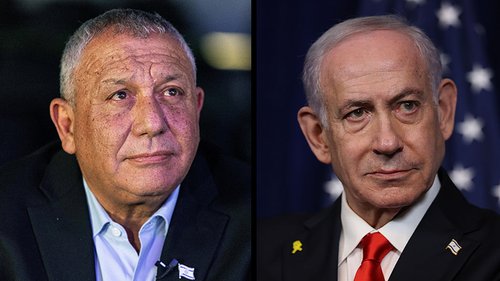
Comments from the political fronts illustrate the impasse. Gadi Eisenkot declared that “if these are the final results, this is a victory for the statist‑Zionist majority in Israel.” This was quoted by UPI.
“If these are the final results, this is a victory for the statist‑Zionist majority in Israel.”
Meanwhile, Benjamin Netanyahu said his right‑wing bloc held a decisive majority among the Jewish and Zionist public, and called Likud “the largest party in Israel.” This quote also appeared in UPI coverage.
“The preliminary poll results point to complete distrust in Netanyahu and the government of Oct. 7, of the Zionist majority and the majority of Israeli citizens,” Eisenkot said on social media late Tuesday.