In brief
The ongoing war between Israel and Hamas has severely crippled healthcare in Gaza, as captured by Dr. Wissam Sukkar, a general practitioner at a Médecins Sans Frontières clinic. With limited resources, she faces an influx of patients suffering from various ailments, all while the healthcare system crumbles around her. As the conflict drags on, hope fades for many in the region, including those unable to access essential medical care.
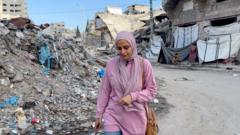
In the war-torn Gaza Strip, a dedicated doctor is confronting the relentless challenges of providing healthcare amid a deepening crisis. Dr. Wissam Sukkar, a GP at a Médecins Sans Frontières (MSF) clinic, describes the harrowing reality of her daily routine, where she must navigate devastated streets to treat patients in a healthcare system on the brink of collapse. With only 21 of Gaza's 36 hospitals partially operational due to ongoing conflict and resource shortages, Dr. Sukkar arrives at her clinic after a grueling 50-minute walk. As she begins her shift at 09:30, around 150 people are already waiting for care, many of whom are displaced locals seeking refuge and medical assistance amid a spike in malnutrition and illnesses. The dire conditions have led to increased cases of respiratory infections and malnutrition, especially among children. "In the shelters, viruses spread quickly among children," Dr. Sukkar notes, emphasizing the impact of overcrowded living situations. As families turn to open fires for cooking due to gas shortages, serious burn cases have also surged in the clinic.“Most of our patients are displaced people,” she states. With an overstretched system and limited medical supplies, Dr. Sukkar and her colleagues struggle to provide adequate care, particularly for complicated cases they cannot refer elsewhere.Since the recent bombing of the al-Ahli Arab hospital, which served as a primary trauma care facility, the number of seriously injured patients requiring urgent attention has escalated. One patient, Saeed Barkat, recounts his surgical history across multiple hospitals that have now been attacked or shut down.The ongoing blockade has left clinics like Dr. Sukkar's severely lacking in essential medications. She reveals a grim inventory situation at her pharmacy, noting a lack of medicines for diabetes, epilepsy, and other critical needs. “We expect that our stock will run out in more or less two weeks,” she warns.After a long day seeing nearly 390 patients, Dr. Sukkar reflects on her struggles to support her family amid the chaos. Like many Gazans, she faces daily hardships securing food and clean water, compounded by frequent displacements. “It's really hard to have any hope,” she laments, encapsulating the despair felt by many amid this seemingly endless conflict. As the war rages on, the question remains—when will there be an end to this nightmare for Dr. Sukkar and the people of Gaza? For now, both healthcare professionals and patients alike await an uncertain future under the shadow of ongoing violence.